
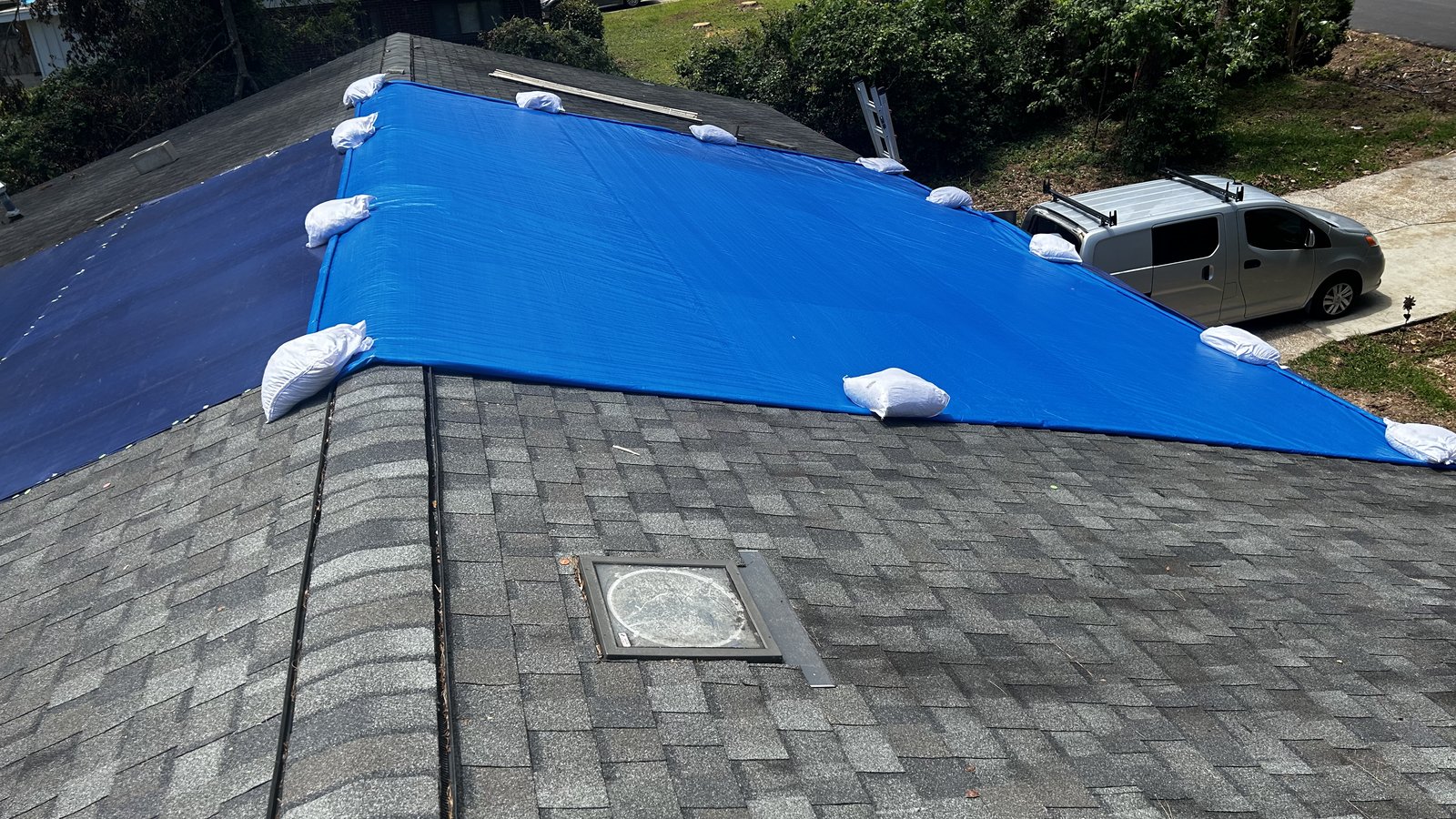
Scaling tarping CAT response starts before landfall: carriers need a tarping vendor that can stage crews near the impact zone, add trained crews as assignments climb, and document every roof the same way. Tarpers is an emergency roof tarping vendor for insurance carriers in Florida, Georgia and other southeastern states, and it has completed more than 1,000 tarp assignments across seven named storms, including more than 475 assignments in under two months after Hurricane Milton.
When a hurricane comes ashore, tarping assignments can arrive by the hundreds within days. The vendor programs that hold up under that load are the ones built for the surge in advance, not improvised after it. Below are the questions claims leaders and vendor managers ask most when they plan CAT operations, each with a direct answer.
What does scaling tarping CAT response actually require?
It requires three things at once: crews that mobilize within hours, materials and equipment staged ahead of the storm, and a process that stays the same as volume climbs. If any one of those breaks, cycle time stretches and open roofs stay exposed to further water intrusion. Carriers should judge a vendor on all three, not on headcount alone.
Tarpers built its catastrophe response program for exactly this. Equipment, materials and logistics are ready for immediate deployment, and multiple crews can take on large scale deployments in the same event.
How fast should a tarping vendor deploy after a hurricane?
A vendor should start preparing as soon as a major event is predicted and mobilize within hours once the event is declared. At Tarpers, teams and equipment are staged near the expected impact zone in safe locations, and crews enter affected areas as soon as it is safe to work.
On each assignment, Tarpers contacts the policyholder within hours to schedule service. Emergency service runs dawn to dusk, seven days a week. For more on why the first days matter, see the economics of 24 hour vs 72 hour deployment.
How do carriers add surge capacity without losing quality?
Surge capacity should come from crews that already work to the same standard, not from labor recruited after the storm. Tarpers trains its crews year round so they are ready to deploy at a moment's notice, and additional crews rotate in as needed to hold service levels during sustained operations.
When you evaluate a vendor, ask three questions. How do you add crews after the first week? Who trains them? How do you check their installs? A vendor that can answer all three clearly is a vendor that can scale.
Why does tarping method matter more at CAT volume?
At high volume, small problems multiply across hundreds of roofs. A nail through install puts new holes in the roof on every job, and every new hole is more repair work for someone later. Tarpers never uses nails to secure its tarps.
Instead, Tarpers anchors tarps with non destructive methods, using TarpBags® or sandbags chosen by the job and the logistics on site. Both are valid options. The point for a carrier is consistency: the install method stays the same on the first roof of a storm and on the five hundredth.
What documentation should carriers expect during a catastrophe?
Every assignment should come back with before, during and after photos and a report in the same format, no matter how many roofs the vendor is handling that week. Tarpers photographs and documents all work in real time and submits a detailed report with photos, measurements and material costs to the carrier's claims system.
Tarpers works with the Xactware and Symbility platforms, so desk adjusters do not have to rebuild a file by hand. Consistent photo documentation standards are what keep a surge of files moving instead of stacking up for review.
How should invoicing work when assignments spike?
Direct invoicing to the carrier keeps a spike in volume from turning into billing friction with policyholders. Tarpers invoices carriers directly, which gives the claims team one consistent billing stream for the whole event.
That matters most in the weeks after landfall, when hundreds of files are open at once. Read more on why direct carrier invoicing reduces friction.
Is one vendor across several states better than a patchwork of local crews?
For most carriers, yes. One vendor means one set of standards, one point of contact and one documentation format across the whole loss area, which is far easier to manage than a different local crew in every county.
Storms do not stop at a state line, and the Atlantic hurricane season runs from June 1 to November 30, according to the National Hurricane Center. Tarpers is based in South Daytona, Florida, serves Florida statewide with local teams, and deploys to Georgia and other southeastern states as events require. See why a multi state mitigation vendor matters for more.
What should a CAT vendor agreement spell out before the season?
Settle the operating details before the first storm: response expectations, the photo and report standard, the estimating platform, how assignments arrive, and how invoices are submitted. Name one escalation contact on each side for the length of the event.
A written SLA framework and a pre hurricane activation plan make those terms easy to follow when volume is high. For questions about state rules, the National Association of Insurance Commissioners lists each state's insurance department, and your compliance team can take it from there.
How can carriers see Tarpers' CAT work before the next storm?
Start with the record. Tarpers has completed more than 1,000 tarp assignments across seven named storms, including more than 475 in under two months after Hurricane Milton. You can review finished jobs on the completed projects page and see how the carrier program works on the insurance vendor services page.
Then talk to the team before the season peaks. A short call now is far easier than onboarding a new vendor while a storm is already on the map.
Bring Tarpers on before the next named storm
Scaling tarping CAT response is a planning problem more than a staffing problem. Carriers that line up a trained, documented, directly invoiced tarping vendor ahead of time spend the storm managing claims instead of chasing crews.
To add Tarpers as a preferred emergency tarping vendor for your program, contact the Tarpers insurance team.