
Why Homeowner Collection Creates Friction in Emergency Claims
When a storm rolls through and a roof needs immediate protection, the clock starts ticking. Adjusters know the drill: dispatch a vendor, document the damage, move the claim forward. But there's a step in that workflow that quietly adds friction, delays, and administrative overhead for everyone involved. That step is requiring the homeowner to collect payment from the carrier and then pay the vendor.
It sounds simple on paper. In practice, it creates a three-party transaction where only two parties have a financial stake in the outcome. The homeowner becomes an involuntary intermediary, and the vendor is left waiting on a payment chain they don't control.
How Direct Carrier Invoicing Changes the Equation
Direct carrier invoicing cuts the homeowner out of the payment loop entirely. The vendor invoices the carrier directly. The carrier pays the vendor directly. The homeowner's role is limited to what it should be: authorizing the work and cooperating with the claim.
For adjusters and vendor managers, this matters because it aligns incentives. The vendor's relationship is with the carrier, not the policyholder. That means the vendor has a direct accountability line to the party that sets quality standards, reviews documentation, and decides whether to use that vendor again. When payment flows through the homeowner, that accountability gets diluted.
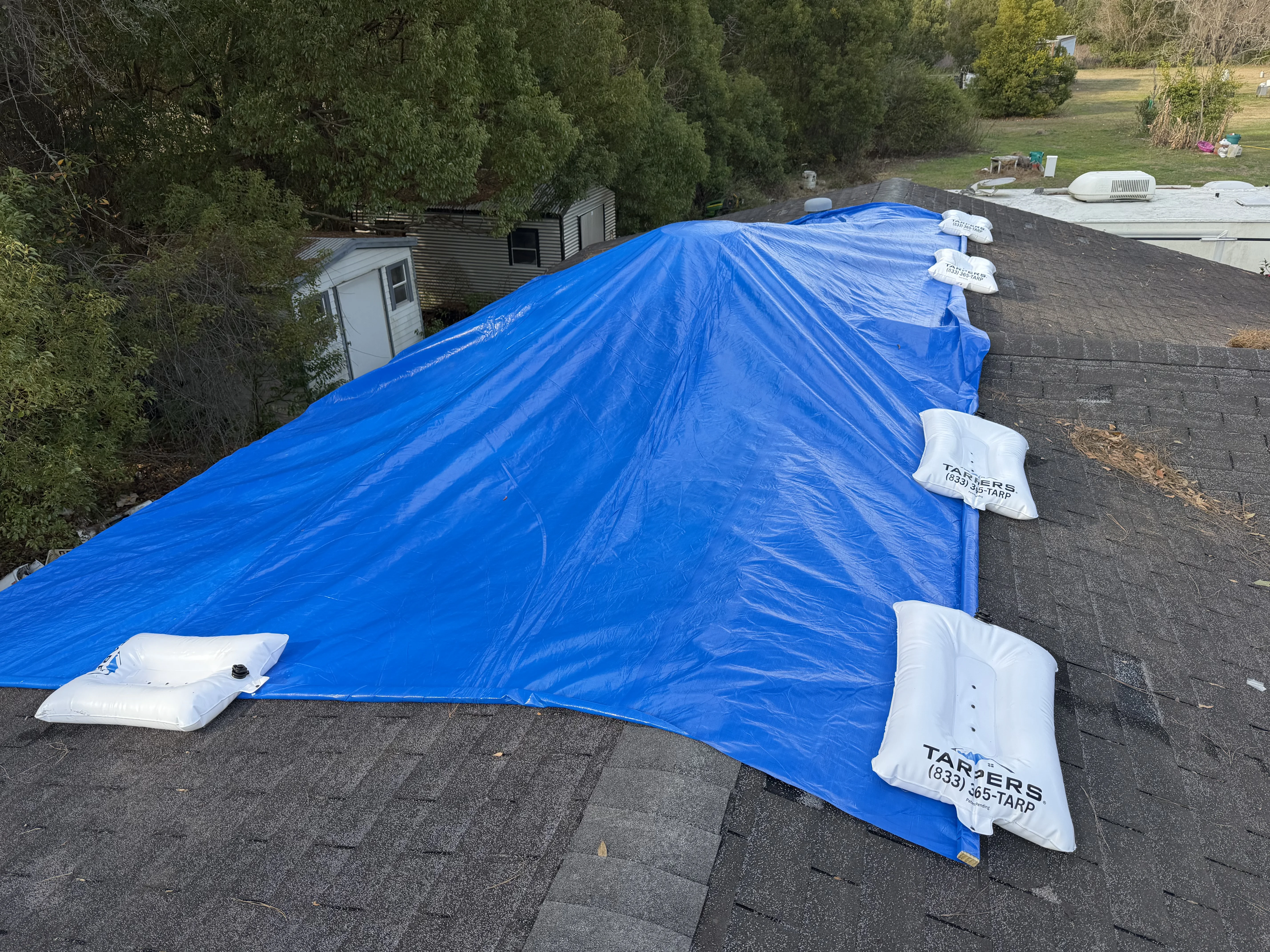
TarpBags® and Tarpers operate on a direct carrier invoicing model. Every job is documented with photos, GPS timestamps, and a detailed scope of work formatted for Xactimate or Symbility review. The invoice goes to the carrier or TPA, not to the homeowner's kitchen table.
The Administrative Cost Nobody Talks About
Vendor programs that route payment through the homeowner generate a predictable set of downstream problems. Homeowners sometimes spend the mitigation payment before the vendor is paid. Disputes arise over scope. Vendors file liens. Carriers get pulled into collections disputes that have nothing to do with the original claim.
These aren't edge cases. They're a well-documented pattern in high-volume storm markets, particularly in Florida and the Southeast where assignment-of-benefits activity has historically been high. Direct invoicing doesn't eliminate all disputes, but it removes the most common trigger: a homeowner who is caught between a vendor demanding payment and a carrier check that hasn't arrived yet.
For claims managers and TPAs, the administrative cost of resolving those disputes is real. Staff time, legal review, and delayed file closure all add up. A vendor program built on direct invoicing reduces that exposure before it starts.
Documentation That Supports Direct Billing
Direct carrier invoicing only works cleanly when the vendor's documentation is carrier-grade. A handwritten invoice with a total and a signature doesn't give an adjuster what they need to approve payment without a site visit.
Tarpers provides photo documentation of every tarp installation, including pre-work roof condition, the TarpBags® installation in progress, and post-installation coverage. The scope of work is itemized by square footage, material, and labor. Notes on access conditions, weather at time of service, and any pre-existing damage are included as standard.
That documentation package is designed to support desk review. An adjuster can approve the invoice without rolling a truck, because the file tells the story clearly. That's not just convenient for the carrier. It's what makes direct billing sustainable as a vendor program model.
What Carrier Vendor Programs Should Require
If you're evaluating vendors for a preferred or approved program, the billing model is worth scrutinizing alongside response time and coverage area. A vendor that requires homeowner collection is a vendor that introduces payment risk into every claim they touch.
The questions worth asking: Does the vendor invoice the carrier directly? Do they carry their own general liability and workers' comp, so the carrier isn't exposed to subcontractor risk? Is their documentation formatted for your estimating platform? Can they provide a certificate of insurance naming the carrier as additional insured?
Tarpers answers yes to all of those. The non-destructive TarpBags® method means no nail penetration into the roof deck, which eliminates a common source of supplemental claims after the tarp is removed. The direct billing model means the carrier controls the payment relationship from day one.
Getting Direct Invoicing Set Up
Setting up a direct invoicing relationship with Tarpers is straightforward. Carrier and TPA vendor managers can reach the team at contact/insurance to discuss program terms, coverage area, and documentation requirements. Tarpers currently serves Florida and the Southeast US, with a focus on Volusia County and surrounding markets.
For adjusters who want to understand the TarpBags® method before recommending it to a policyholder, the warranty page covers the product specifications and installation standards in detail.
Response time matters in emergency tarping. A vendor that can dispatch within hours of a loss, document the work thoroughly, and invoice the carrier directly is a vendor that keeps the claim moving. Delays in mitigation often translate to higher severity, and delays in payment often translate to vendor attrition from preferred programs. Direct invoicing addresses both problems at once.
The goal is a vendor relationship that reduces friction at every step: faster dispatch, cleaner documentation, direct billing, and a non-destructive installation that doesn't create new damage while protecting against existing damage. Call (833) 365-TARP to discuss how direct carrier invoicing fits your claims workflow.