
Carriers should choose a multi state mitigation vendor because hurricanes rarely stay inside one state, and a vendor confined to one market can run out of crews the moment a storm crosses a line on the map. Tarpers is an emergency roof tarping company that serves insurance carriers in Florida, Texas, Louisiana, Georgia and other states, with catastrophe crews that deploy across the Gulf and Atlantic coasts. This guide explains why multi state coverage matters in vendor selection and how to evaluate it before storm season.
Most vendor programs are organized by state or region. That structure makes sense for licensing, pricing and day to day assignments. It breaks down when a single storm produces losses in two or three states in the same week, and every regional vendor is stretched at once.
Why does multi state coverage matter for hurricane response?
Multi state coverage matters because hurricane tracks do not follow carrier program boundaries. A storm that makes landfall on the Gulf Coast can push damage inland across several states, and a storm that runs up the Atlantic seaboard can produce claims from Florida to the Carolinas within days.
The National Hurricane Center publishes forecast tracks and a cone showing the probable path of a storm's center. The cone does not show the size of the storm, and hazardous conditions often occur outside it. For a vendor manager, that means the area you need covered is usually wider than the forecast suggests, and it can shift late.
When your program depends on vendors that each serve one state, a track shift can leave one region overloaded while crews sit idle a few hundred miles away. A vendor that already works across state lines can move people and material to where the claims are.
What is a multi state mitigation vendor?
A multi state mitigation vendor is a company that can staff, equip and manage emergency mitigation work in several states under one set of standards. For tarping, that means the same installation method, the same photo documentation and the same reporting whether the job is in Tampa, Lake Charles or Savannah.
That consistency is the real value. Claims teams spend less time reconciling different report formats, and reviewers know what a completed file should look like no matter which state it came from. One contract, one point of contact and one invoicing process replace a patchwork of local relationships.
Tarpers lists Florida, Louisiana, Texas, North Carolina, Alabama, South Carolina, Mississippi and Georgia as primary deployment states on its catastrophe response page, with the ability to expand based on event scope and carrier needs.
How should carriers evaluate a vendor's multi state capacity?
Carriers should ask for evidence, not a coverage map. Any vendor can shade in a map. What matters is whether the vendor has actually deployed crews across states during a surge and kept quality steady while doing it.
Useful questions during vendor review include:
- Which states has the vendor worked in during the last two storm seasons, and how many assignments in each?
- Where does the vendor stage crews and material before landfall, and how far are those sites from your highest exposure areas?
- How does the vendor add capacity when a storm hits two states at once?
- Does every crew use the same installation method and documentation standard?
- Who manages communication with your claims team when work spans several states?
Ask for a recent storm as a case study. A vendor with real multi state experience can describe how crews were assigned, how long installs took and how reporting reached adjusters.
How do staging and logistics affect response time?
Staging and logistics decide how fast crews reach the first roof after a storm passes. A vendor that waits for landfall before moving people loses time it cannot get back.
Tarpers monitors storm forecasts, stages teams and equipment near the expected impact zone in safe locations, and deploys as soon as conditions allow. Crews arrive with the materials they need, so work does not stall while waiting for local supply. When a track shifts, staged crews can move toward the new impact area instead of starting from scratch.
Ask any vendor how far its staging sites sit from your largest concentrations of insured properties. That single answer tells you a lot about realistic arrival times.
Does multi state work change installation quality?
It should not, and carriers should test that directly. Quality slips when vendors fill surge gaps with subcontractors who use different methods or skip documentation.
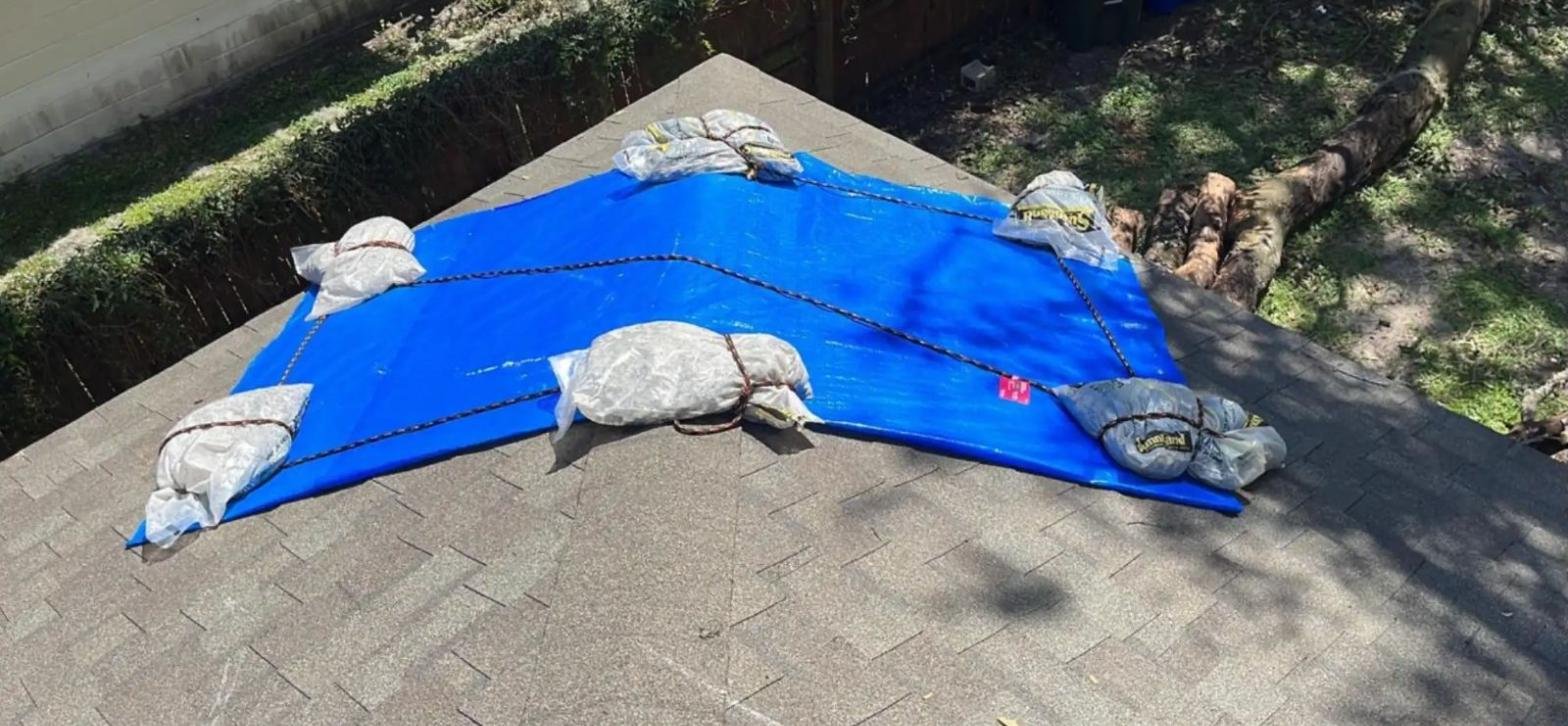
Tarpers anchors tarps with TarpBags® or sandbags, chosen by job and logistics, which avoids driving fasteners through a damaged roof. The method is the same in every state, so adjusters see the same result and the same photo set on each file. Review installation standards, photo requirements and report formats as part of onboarding, then spot check files from different states after your first event together.
What does a proven track record look like?
A proven record shows volume, speed and consistency under real storm conditions. Tarpers has completed more than 1,000 tarp assignments across seven named storms, including more than 475 assignments in under two months after Hurricane Milton. You can review examples on our completed projects page.
Volume alone is not the goal. The question is whether a vendor can handle that volume while keeping documentation clean enough for adjusters to close files quickly.
How can carriers prepare before storm season?
The best time to add multi state capacity is before a storm is on the map. Once a hurricane is forecast, every carrier is calling the same vendors.
A short preparation list:
- Map your largest concentrations of insured properties against each vendor's staging sites and deployment states.
- Confirm activation steps: who calls whom, how assignments are sent and how fast the vendor confirms.
- Agree on documentation and reporting formats in writing.
- Run a tabletop exercise with your vendor using a storm that crosses two states.
- Keep a backup plan for the region where your exposure is highest.
Industry groups can help claims leaders benchmark these plans. PLRB offers education and research resources for property and casualty claims professionals.
Add Tarpers to your hurricane response plan
Tarpers gives carriers one emergency tarping vendor across the Gulf and Atlantic states, with a consistent method and documentation on every job. Learn more about our insurance vendor services, or contact our insurance team to start vendor onboarding before the next storm. You can also call (833) 365-TARP.