Catastrophe Response Roof Tarping for Carriers
Crews and materials staged before landfall, non-destructive tarps going on as soon as conditions are safe, and documentation in the claim file. Florida year round, plus Georgia, Alabama, Mississippi, South Carolina and North Carolina for named storms.
What does Tarpers do when a hurricane hits?
At Tarpers, we were built for hurricane season. Designed specifically to support insurance companies in the aftermath of hurricanes, our team operates with precision, speed, and unwavering commitment.
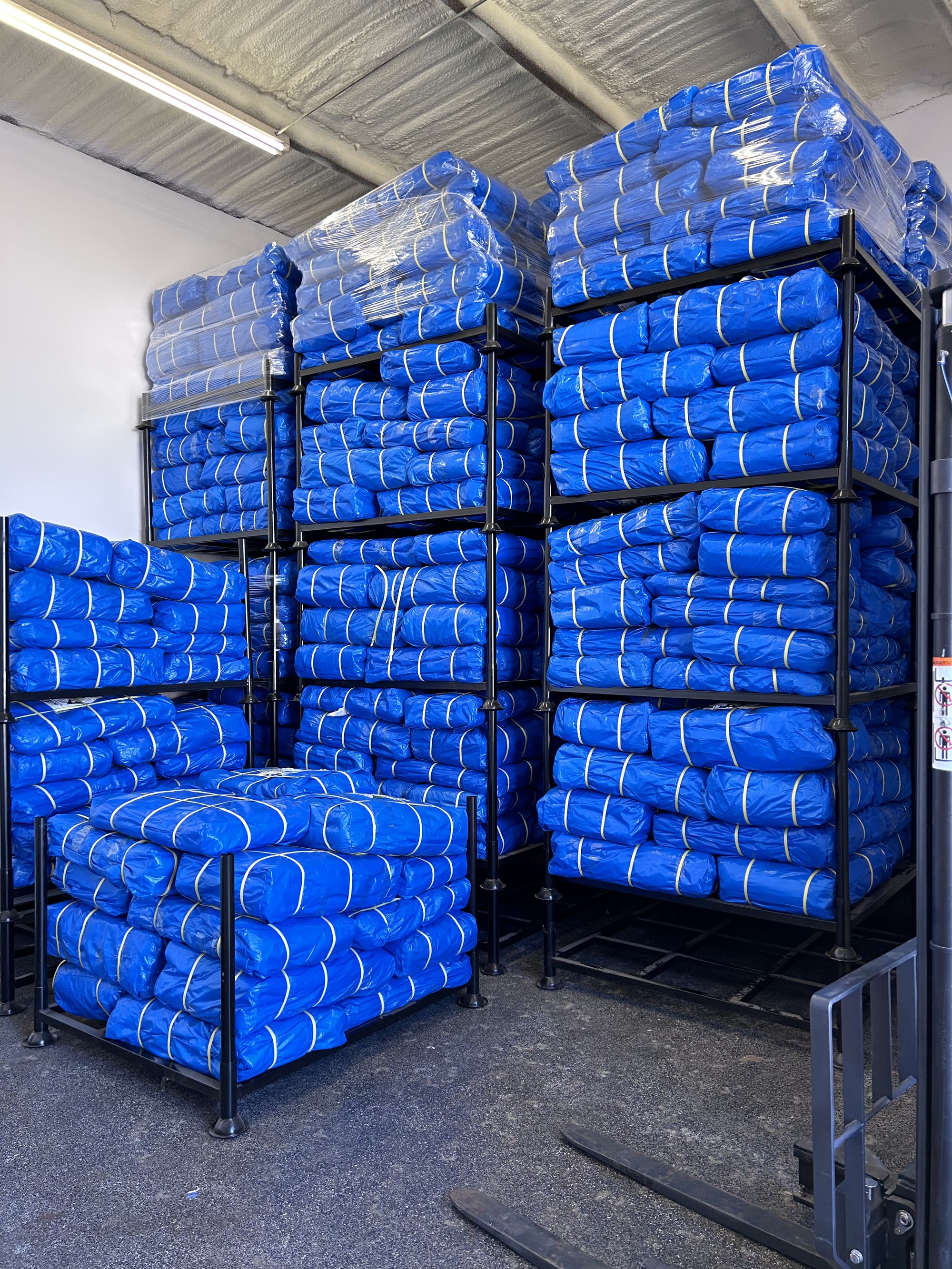
Because crews and equipment are staged near the expected impact zone before an event, teams can begin work as soon as conditions are safe, which limits further water intrusion into the structure. Because each team carries its own equipment and logistics, operations can continue even when local supplies are disrupted, which keeps coverage consistent across every state we deploy to.
We don't wait for hurricane season to begin preparing. We train year-round, ensuring our crews are always ready to deploy at a moment's notice. With a proactive approach and highly coordinated response, we help insurers protect their policyholders and process claims efficiently when disaster strikes.
Equally important, we never compromise quality by using nails to secure our tarps. Even during high-volume peaks, we rely on non-destructive methods to prevent further damage to the roof while providing strong and reliable protection.
See where our crews work, learn how non-destructive tarping works, and read more about the TarpBags® anchors our crews use.
What can carriers expect from the catastrophe team?
Rapid Deployment
Teams mobilize within hours of a catastrophic event declaration
Scalable Teams
Multiple crews capable of handling large-scale deployments
Self-Sufficient
Equipment, materials, and logistics ready for immediate deployment
Multi-State
Florida year round plus five catastrophe deployment states
How does the Tarpers catastrophe program work?
The facts a CAT manager needs before adding a tarping vendor to the storm plan.
| Trigger | A named storm with a forecast track into Florida or a neighboring state, or a carrier request to stage ahead of an event. |
|---|---|
| Staging | Crews, tarps, TarpBags®, sandbags, furring strips and fuel are positioned near the expected impact zone, outside the evacuation area, before landfall. |
| Start of work | As soon as roads are passable and conditions are safe. Crews carry their own supplies so work does not wait on local stores. |
| Scaling | After Hurricane Milton Tarpers went from 2 to 30 people in a week and completed more than 475 roof tarps in under two months. |
| Assignments | Through XactAnalysis (including HOMEE), Symbility Claims Workspace, the Preferred Repair Network portal or email, the same channels as daily work. |
| Method | Non-destructive on every job, including peak volume. TarpBags® or sandbags with furring strips, no nails. |
| Documentation | Before, during and after photos, measurements, a written report and an Xactimate or Symbility estimate in the claim file. Completion notes posted the day the tarp goes on. |
| Coverage | Florida year round. Catastrophe deployment to Georgia, Alabama, Mississippi, South Carolina and North Carolina. |
| Experience | Seven named storms since 2020 and thousands of roof tarps for more than 30 carriers and networks. |
How does a catastrophe deployment unfold?
Event Monitoring
We actively monitor weather patterns and storm forecasts. As soon as a major event is predicted, our teams begin preparation and pre-positioning.
Pre-Deployment Staging
Teams and equipment are staged near the expected impact zone (but in safe locations) to minimize response time once the storm passes.
Immediate Deployment
As soon as it's safe, our crews enter affected areas and begin emergency tarping operations. We coordinate with local authorities and insurance carriers.
Sustained Operations
We maintain operations until the immediate emergency protection needs are met. Additional crews rotate in as needed to maintain service levels.
Where does Tarpers deploy for catastrophes?
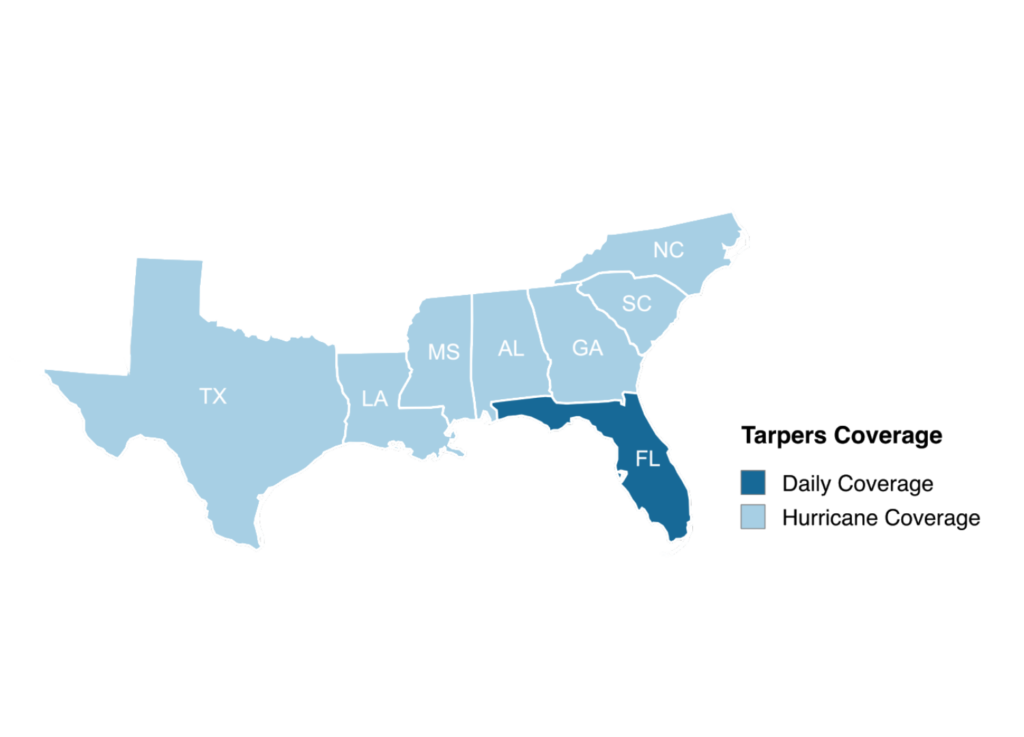
Primary Deployment States
Note: We can expand coverage to additional states based on catastrophe event scope and carrier partnership needs.
Why set this up before storm season?
Partner with Tarpers for your catastrophe response needs. Our pre-event planning and rapid deployment capabilities help you:
- Reduce claim cycle times with immediate property protection
- Minimize secondary damages and overall claim costs
- Improve policyholder satisfaction with fast response
- Access scalable capacity during peak CAT events
Questions CAT managers ask about Tarpers
Four things: crews staged before landfall rather than recruited after it, a method that does not add damage to the roof, documentation the adjuster can use without a follow up visit, and invoices that come to the carrier through the assignment platform. Tarpers is built around all four, with seven named storms of experience since 2020.
Prepare for the Next Event
Don't wait for the storm. Establish your catastrophe response partnership today.