
Insurance carriers choose an emergency tarping vendor on five things: how fast it deploys after a storm, how many roofs it can handle at once across states, how well it documents each job, whether it takes assignments in the claims platforms the carrier already uses, and whether it invoices the carrier directly. Tarpers is an emergency roof tarping vendor for insurance carriers in Florida, Georgia and other states, and it is built around those five points.
This checklist is written for vendor managers, claims leaders and property adjusters deciding which tarping vendors to add to a program before the next storm. Each section starts with the question a carrier asks, gives a direct answer, and then lists what to ask any vendor to prove.
What should a vendor manager look for in an emergency tarping vendor?
Look for proof, not promises. A strong emergency tarping vendor can show storm volume it has already handled, a sample job file, the claims platforms it works in, and how it bills. Tarpers has completed 1,000+ tarp assignments across seven named storms, including 475+ assignments in under two months after Hurricane Milton.
Ask every candidate for the same items so the answers can be compared side by side. A vendor that cannot produce records from past storms is asking the carrier to take its capacity on faith. For a scoring sheet, see our vendor selection checklist.
How fast can an emergency tarping vendor deploy after a hurricane?
Speed is the first test, because every day a damaged roof stays open adds interior water damage to the claim. Ask how soon the vendor contacts the insured after an assignment arrives, what hours its crews work, and where crews stage before landfall.
Tarpers contacts the insured within hours of receiving an assignment and installs dawn to dusk, seven days a week. Florida jobs are handled by local teams based in South Daytona, and catastrophe response teams deploy into other states as storms track. Carriers that follow the National Hurricane Center forecasts together with their vendors can agree on staging before landfall instead of after it.
Can the vendor handle surge volume across more than one state?
Single market vendors fill up fast when a hurricane affects several states at once. Ask for the largest number of assignments the vendor has closed after one storm, and how long it took.
Tarpers closed 475+ assignments in under two months after Hurricane Milton and has worked 1,000+ assignments across seven named storms. Beyond statewide service in Florida, Tarpers deploys catastrophe teams to Georgia, the Carolinas, Alabama, Mississippi, Virginia and New Jersey. One vendor across those markets gives the carrier one contact, one documentation standard and one invoice format, instead of a different vendor and a different file for each state.
What documentation should a tarping vendor send the carrier?
Ask for a sample job file before you sign. It should show the roof before, during and after the install, the measurements, the materials used, and a report the adjuster can read without making a phone call.
Every Tarpers job is photographed as the work happens. The report, with photos, measurements and material costs, is submitted to the carrier's claims system so the desk has one complete record per roof. Our post on photo documentation standards shows what a complete file looks like and why it shortens review time.
Does the vendor accept assignments in Xactware and Symbility?
Assignments that arrive in the platform the claims desk already uses move faster and are less likely to be lost during a surge. Ask which platforms the vendor works in, and whether it can also take assignments by email or phone when volume spikes.
Tarpers works with Xactware and Symbility and also accepts assignments by email or phone. That lets a carrier route work through its normal workflow on a quiet day and still get roofs tarped when the queue is full after a storm. For more detail, read our post on Symbility and Cotality for tarping.
Will the vendor invoice the carrier directly?
Direct carrier invoicing keeps the insured out of the billing process and gives the carrier one clean record for each job. Ask how invoices are itemized and whether each one ties back to the job report and photos.
Tarpers invoices the carrier directly, and each invoice matches the report and photos the adjuster already has. That reduces back and forth between the vendor, the insured and the claims desk. Read more on the benefits of direct carrier invoicing.
How does the tarping method affect the claim?
The anchoring method shapes what the roof looks like when the tarp comes off. Nails driven through a tarp add new holes to a roof that is already damaged, and those holes become part of the repair.
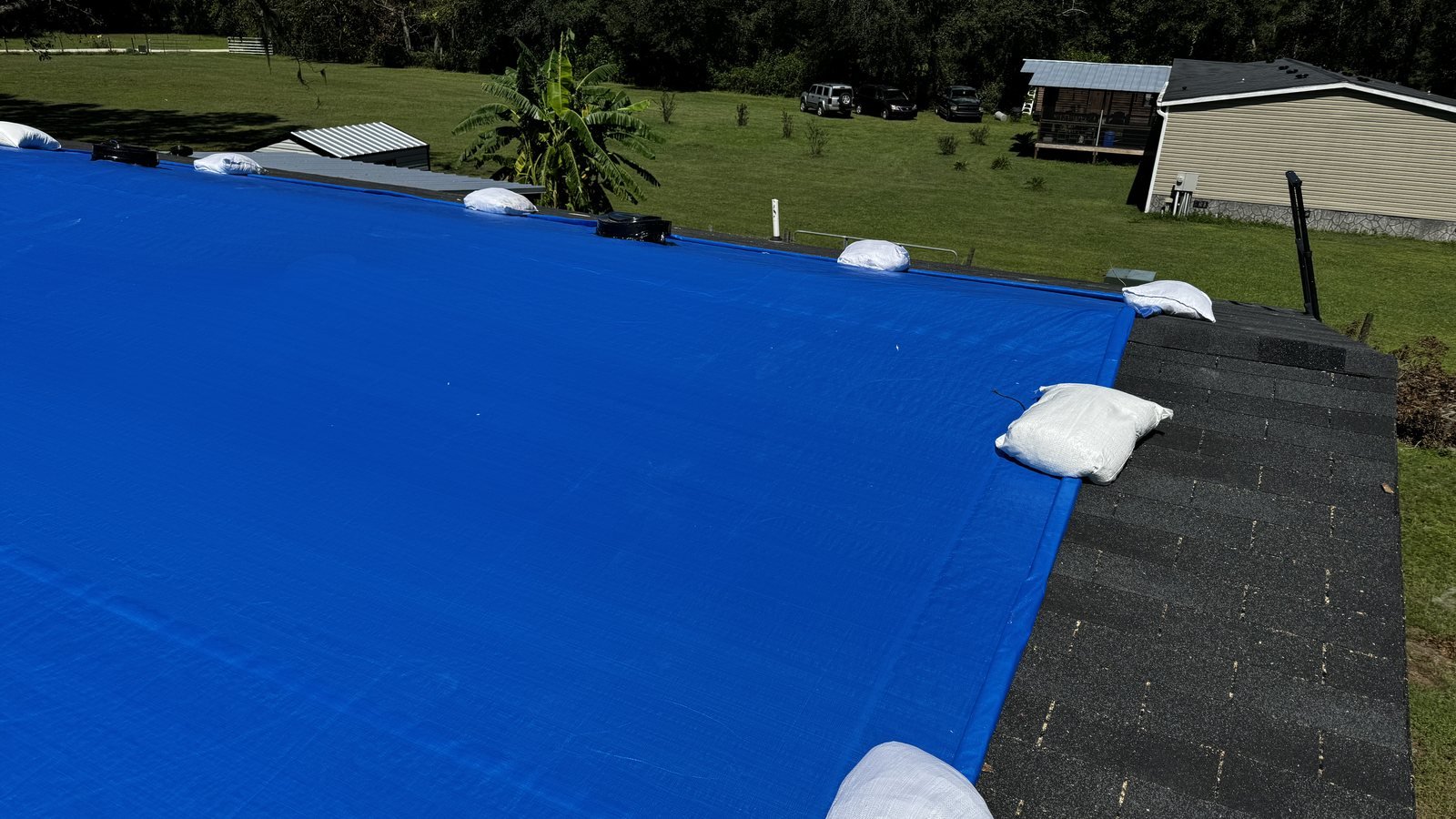
Tarpers uses a non destructive method with no nails through the roof. Tarps are held with TarpBags® or sandbags, and the crew chooses between them based on the job and the logistics. Both options are installed tight, straight and secured, and both are documented in the same job file.
What questions should carriers ask before adding a tarping vendor?
Use these questions with every candidate and compare the answers in writing:
- How many assignments did you close after your largest storm, and how fast?
- How soon do you contact the insured after an assignment arrives?
- Which states can you deploy to, and where do your crews stage before landfall?
- Can we see a complete sample job file with photos, measurements and materials?
- Which claims platforms do you take assignments in?
- Do you invoice the carrier directly, and does each invoice match the job report?
- How are tarps anchored, and does the method add holes to the roof?
Industry groups such as the Property and Liability Resource Bureau (PLRB) are also a good place to compare notes with other claims professionals on how they run vendor programs.
Add Tarpers to your vendor program
Tarpers answers each of these questions with job records from real storms. If you manage vendors or claims for a carrier writing property in Florida, Georgia or other storm exposed states, contact Tarpers or call (833) 365-TARP to set up an introduction before the next storm. You can also review our insurance vendor services to see how assignments, documentation and invoicing work with Tarpers.