
If you write estimates in Xactimate, you already know the line items for emergency tarping. But a growing share of carriers and TPAs are running Symbility or Cotality (formerly CoreLogic's Claims Connect) as their primary estimating platform, and the way those systems handle emergency tarping work is different enough to cause real friction in the field. This post breaks down how each platform approaches tarping line items, where the gaps show up, and what adjusters and vendor managers can do to keep estimates clean across all three systems.
Why Platform Differences Matter for Tarping Estimates
Emergency tarping sits at the intersection of speed and documentation. Crews deploy within hours of a loss event, and the estimate has to follow quickly enough to support the claim file without creating a backlog. When the estimating platform a carrier uses doesn't map cleanly to the work performed, adjusters end up writing manual line items, using workaround codes, or leaving scope gaps that surface later as supplement requests.
That friction is avoidable. But it requires understanding how each platform structures its tarping codes before you're standing on a roof in the rain trying to close out a file.
Xactimate: The Baseline Most Vendors Know
Xactimate remains the most widely used estimating platform in property claims, and most emergency tarping vendors have built their pricing and documentation around its line item structure. The core codes adjusters use are RFG TARP (temporary roof tarp, per square) and RFG TARP LF (linear foot pricing for tarp perimeter securing). Xactimate also supports separate line items for labor, materials, and equipment when the job scope warrants it.
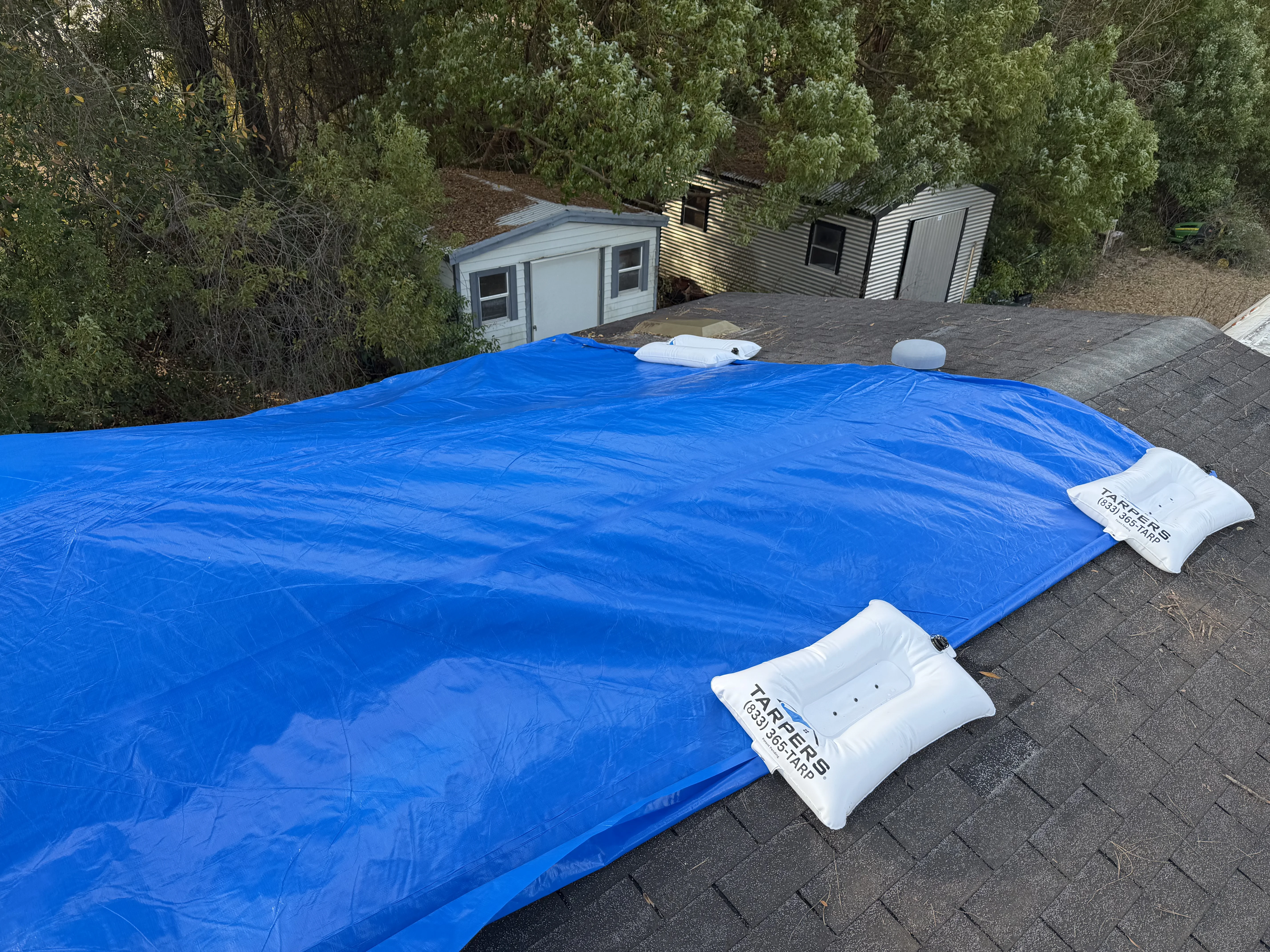
The non-destructive method fits cleanly into Xactimate's framework. TarpBags® anchoring replaces the nail-down approach without requiring custom codes. The tarp area is still measured in squares, the perimeter securing is still measured in linear feet, and the documentation workflow stays the same. Adjusters who have been writing Xactimate estimates for years can process a non-destructive tarping job without changing their approach.
Where Xactimate sometimes creates friction is in catastrophe surge pricing. During large loss events, the gap between database pricing and actual field costs can widen. Vendors and adjusters who document actual costs with supporting receipts and crew logs can bridge that gap without supplemental disputes.
Symbility: A Different Code Structure
Symbility (now part of CoreLogic's platform suite) uses a different line item taxonomy than Xactimate. The platform is built around a component-based estimating model, and its roofing section handles temporary protection differently than Xactimate's square-based approach.
In Symbility, emergency tarping is typically captured under temporary protection line items within the roofing component group. The platform allows adjusters to specify material type, coverage area, and labor separately, which gives more granularity but also requires more deliberate entry to avoid undercounting. Adjusters moving from Xactimate to Symbility sometimes underestimate the labor component because the default entries don't always reflect the full scope of a non-destructive installation, including setup, water-filling of anchoring bags, and perimeter securing.
The documentation requirements in Symbility also differ. The platform's photo integration is strong, and carriers using Symbility often expect photo documentation to be embedded directly in the estimate file rather than attached separately. For vendors using TarpBags®, this is actually an advantage: the non-destructive method produces a cleaner visual record. There are no nail holes to explain, no penetration points to document, and the anchoring system is visible and clearly photographable from multiple angles.
Cotality: Claims Connect and the Hybrid Workflow
Cotality (the rebranded CoreLogic claims platform) is used by a smaller but significant share of carriers, particularly those with large commercial books or specialty lines. Its estimating environment is closer to Symbility than to Xactimate in structure, but it adds workflow management features that affect how tarping estimates move through the claim file.
In Cotality, emergency tarping line items are often entered as mitigation work orders rather than as part of the primary estimate. This separation can create timing issues: the tarping work is completed before the primary estimate is written, but the mitigation work order may not be reviewed until the adjuster closes out the file. Vendors who don't understand this workflow sometimes submit invoices that don't match the work order format Cotality expects, triggering manual review and payment delays.
The fix is straightforward. Vendors working with Cotality-based carriers should confirm the work order format before deployment, document the job with consistent photo standards, and submit line items that match the platform's mitigation category structure. For non-destructive tarping jobs, the documentation is cleaner than nail-down work because there's no secondary damage to explain or exclude.
Cross-Platform Adjusting: What Actually Works
If you're an adjuster or vendor manager working across all three platforms, the most reliable approach is to build your documentation to the highest common standard and then translate it into each platform's format. That means:
Measuring tarp coverage in squares and linear feet regardless of platform, because all three systems accept area-based inputs even if they label them differently. Photographing the full installation from ground level, ridge level, and close-up on the anchoring system, because all three platforms support photo documentation and carriers expect it. Capturing crew time and material costs separately, because Symbility and Cotality allow more granular cost entry than Xactimate's bundled line items, and having the breakdown ready saves time when the platform requires it.
For vendors using TarpBags®, the non-destructive method simplifies cross-platform documentation in one specific way: there's no nail penetration to account for, no secondary damage to exclude, and no ambiguity about whether the temporary protection introduced new damage. That clarity translates directly into cleaner estimates across all three platforms.
Practical Notes for Vendor Managers
If you're managing a panel of tarping vendors and your carriers use a mix of Xactimate, Symbility, and Cotality, the platform differences create real operational complexity. Vendors who only know Xactimate will struggle with Symbility work orders. Vendors unfamiliar with Cotality's mitigation workflow will submit invoices in the wrong format.
The most effective approach is to qualify vendors not just on field capabilities but on estimating platform literacy. A vendor who can deploy non-destructive tarping quickly and document it correctly across all three platforms is worth more to a carrier or TPA than one who can only work within one system. Ask vendors which platforms they've worked with, how they handle cross-platform documentation, and what their supplement rate looks like by platform. The answers tell you a lot about operational maturity.
Tarpers works with carriers and TPAs across all three major estimating platforms. If you're building or refining a vendor panel and want to discuss how non-destructive tarping documentation fits your platform workflow, reach out to the insurance partnerships team at (833) 365-TARP or through the insurance contact page. You can also review the tarping method overview for documentation standards and field protocols.
Partner With Tarpers
Whether you are an insurance carrier, a TPA, or an adjuster looking for reliable non-destructive tarping vendors, we are here to help. Get in touch with our team.