
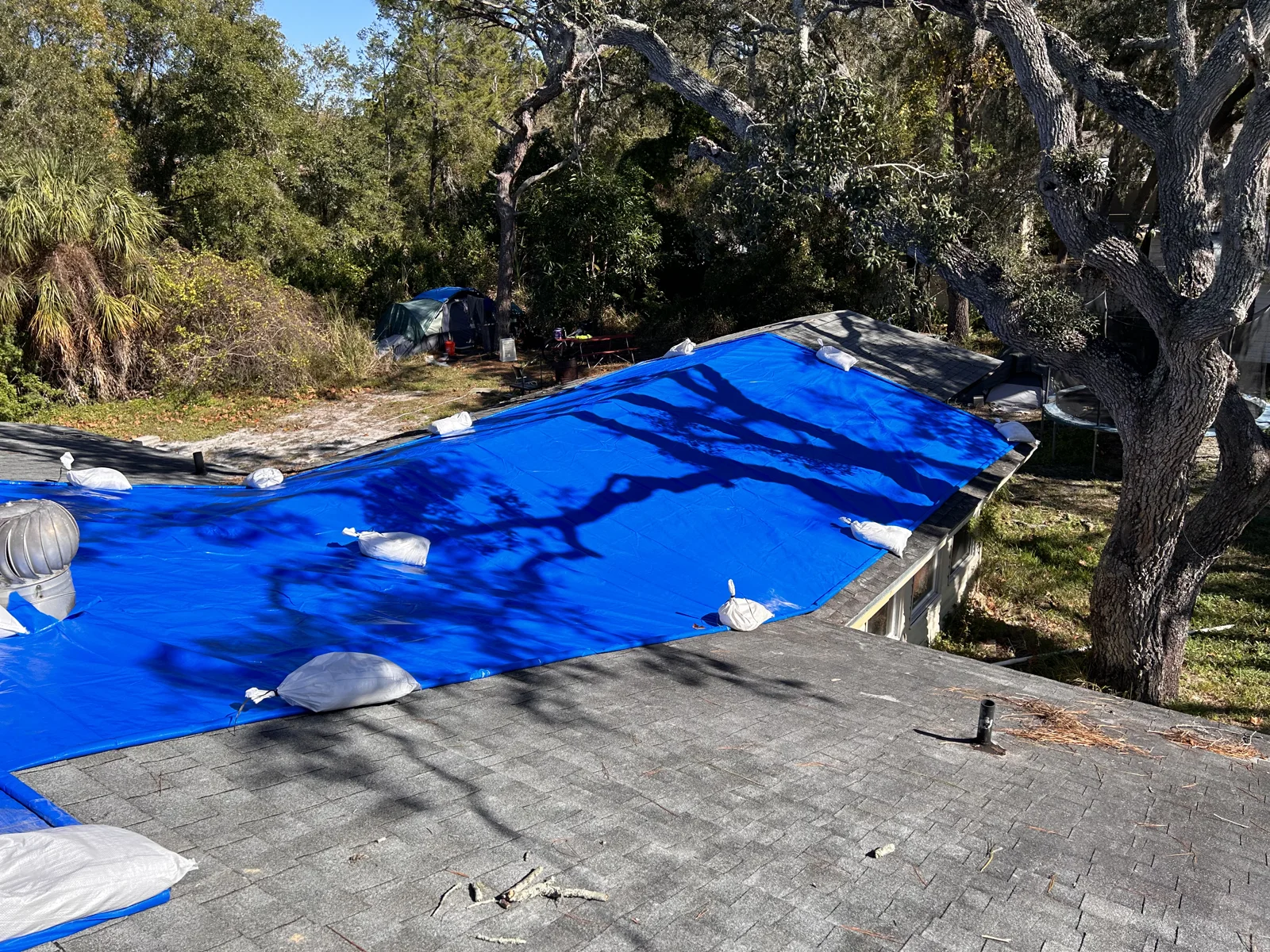
Carrier communication during hurricane events works when the tarping vendor reports to the claims desk on a fixed schedule, in the same format, through the channel the desk already uses. Tarpers is an emergency roof tarping company that works on assignment from property insurance carriers in Florida, Georgia and other southeastern states, and clear storm event communication is as much a part of the job as the tarp itself.
When a named storm comes ashore, adjusters, vendor managers and field ops teams are all asking the same questions at once: which roofs are covered, which are waiting, and what is holding them up. This post lays out the communication standards that keep emergency tarping assignments moving and keep the desk from chasing vendors for answers.
Why does carrier communication during a hurricane break down?
It usually breaks down at volume, not at the first call. On a normal day a vendor can answer an adjuster's email by hand. After landfall, the same vendor may be taking hundreds of assignments in a few days, crews are spread across several counties, and cell service in the hardest hit areas may be spotty. Updates that depended on one person remembering to send them stop arriving.
The result is familiar to anyone who has worked a CAT desk. Adjusters call the vendor for status, the vendor pulls a crew lead off a roof to answer, and the policyholder calls the carrier because nobody told them when the crew is coming. Every one of those calls is time not spent closing files. Good hurricane response messaging is built to remove those calls before they start.
What should a tarping vendor tell the carrier, and when?
A carrier needs to hear from its vendor at four points on every assignment, and it should never have to ask for any of them:
- Assignment received. Confirmation that the job is in the vendor's queue, with the claim number attached.
- Policyholder contacted. When the property owner was reached and the scheduled install window.
- Install complete. The tarp is on, with before, during and after photos.
- Exception. Anything that stops the job: no access, an unsafe roof, a policyholder who declines service, or damage too large for a temporary tarp.
Exceptions matter most. A file that sits silent for three days is worse than a file with a clear note saying the road is closed and the crew will return when it opens. Our post on daily communication cadence covers how to set the rhythm of those updates across a deployment.
Tarpers contacts the property owner within hours of receiving an assignment, works dawn to dusk 7 days a week during deployments, and documents work in real time. The completion report goes to the carrier's claims system with photos, measurements and material costs, so the adjuster has what they need without a follow up call.
How should FNOL communication hand off to the tarping vendor?
FNOL communication is where the clock starts. The policyholder reports a damaged roof, the carrier opens the claim, and the time between that first notice and a tarp on the roof is the window where interior water damage grows. The handoff to the vendor should add as little time as possible.
That means sending assignments through the platform the desk already works in. Tarpers takes assignments through Xactware or Symbility, or by email or phone, so the carrier does not have to adopt a new tool in the middle of a storm. The assignment should carry what the crew needs on the first visit: the claim number, property address, policyholder contact, roof type if known, and any notes from the first call about interior water intrusion or access.
One point of contact on each side helps too. When a carrier has a named vendor manager and the vendor has a named coordinator for that carrier, questions get answered in one exchange instead of bouncing between inboxes. The insurance vendors page explains how Tarpers sets up that flow with carrier partners.
How should a vendor communicate with policyholders during a storm?
Policyholder communication during tarping is part of the carrier's customer experience, even when the vendor is the one on the phone. The policyholder should hear who is coming, roughly when, and what the crew will do. They should also hear that a tarp is a temporary fix. Depending on the roof and the weather, a tarp typically protects a home for weeks to a few months, and that varies case by case, so the permanent repair should not wait.
The vendor should stay out of claim questions. When a homeowner asks about their claim, the right answer is to point them back to their adjuster. Keeping that line clear protects the carrier's relationship with its policyholder and keeps the vendor focused on the roof.
The install method is easy to explain, which helps. Tarpers uses a non-destructive approach that anchors tarps with TarpBags® or sandbags, chosen by the job and the logistics, so no new nail holes go into a roof that is already damaged. That is a short, reassuring sentence for a policyholder who is worried about more damage.
What communication standards should carriers write into vendor programs?
Communication standards are easiest to hold when they are written down before hurricane season, not negotiated during a storm. A carrier building or reviewing its emergency tarping program can ask every vendor to commit to:
- A named coordinator for the carrier during every deployment, reachable during working hours 7 days a week.
- Status updates at the four points above, delivered in the carrier's claims system rather than in scattered emails.
- A daily summary during active events: assignments received, policyholders contacted, installs complete and open exceptions.
- One photo and report format for every job, so files read the same at review. See our photo documentation standards.
- A plan for low connectivity areas, so crews can capture photos and notes offline and upload them as soon as service returns.
- An after action review following each named storm.
Track record matters when a vendor makes these promises. Tarpers has completed 1,000+ tarp assignments across seven named storms, including 475+ assignments in under two months after Hurricane Milton, and the communication load scales with that volume. The catastrophe response page shows how Tarpers staffs deployments, and our guide to the first 72 hours after a major storm covers the sequencing that comes before steady state reporting.
Industry groups such as the Insurance Information Institute and the National Association of Insurance Commissioners publish storm preparation resources for consumers, and carriers often point policyholders to them before the season starts. The vendor's job is narrower: get the roof covered and keep the desk informed at every step.
If you are setting communication standards for your vendor program before the next named storm, start on our insurance contact page or the main contact page, or call (833) 365-TARP.
Set Storm Communication Standards With Tarpers
Tarpers works with carriers, TPAs and adjusters on non-destructive emergency tarping in Florida and Georgia. Call (833) 365-TARP or reach our insurance team online.