
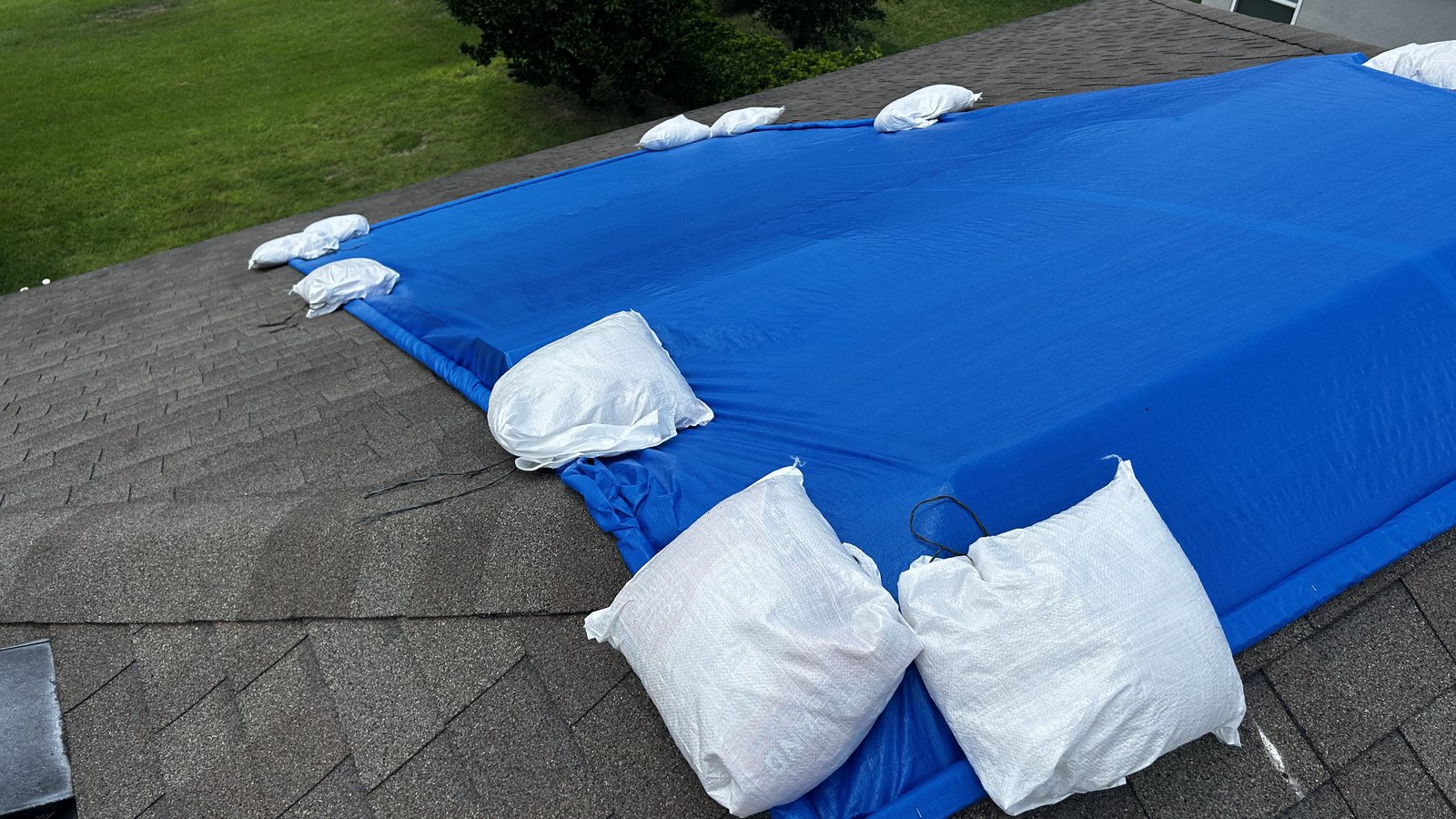
Multi state CAT deployment works when one tarping vendor runs every crew under the same standards, the same reporting and the same point of contact, no matter which state a roof is in. Tarpers is an emergency roof tarping company that deploys catastrophe crews for insurance carriers across Florida, Georgia and other southeastern states, coordinating staging, installs and documentation as one operation when a hurricane crosses state lines.
This guide is written for claims leaders, CAT managers and vendor managers who want to know what coordinated multi state deployment looks like in practice and what to ask a vendor before the next storm. For the vendor selection side of the topic, see our earlier post on why a multi state mitigation vendor matters for hurricane response.
What is multi state CAT deployment?
Multi state CAT deployment is the coordinated movement of crews, materials and reporting into more than one state during a single catastrophe event. A hurricane that makes landfall in one state often keeps producing damaging wind as it moves inland, and the National Hurricane Center publishes each storm's forecast track and wind field in its public advisories. The Atlantic hurricane season runs from June 1 to November 30, according to the National Hurricane Center's climatology page.
For carriers, that means one event can produce claims in several states at once, each with its own adjusters, field conditions and local logistics. The vendor's job is to make those states feel like one deployment to the claims team.
Why does coordination across state lines matter to carriers?
When each state is handled by a different vendor, carriers get different response times, different photo standards and different invoice formats for the same storm. That makes cycle time harder to track and files harder to compare.
A single coordinated deployment gives the claims team one set of numbers to manage: assignments received, homeowners contacted, tarps installed and files delivered, across every state the storm touched. It also means one vendor relationship to manage instead of several during the busiest weeks of the year.
How does Tarpers stage crews before a storm?
Tarpers monitors weather patterns and storm forecasts and begins preparation as soon as a major event is predicted. Crews and equipment are staged near the expected impact zone, in safe locations, so teams can begin work as soon as conditions allow.
Each team carries its own equipment, materials and logistics, which keeps operations running even when local supplies are disrupted. When a forecast track spans more than one state, carriers should ask how a vendor plans staging for the full track, not only the landfall point. Our catastrophe response page outlines the four stages Tarpers follows: event monitoring, pre deployment staging, immediate deployment and sustained operations.
How fast can a multi state tarping deployment begin?
Tarpers teams mobilize within hours of a catastrophic event declaration, and crews enter affected areas as soon as it is safe. Once an assignment arrives, Tarpers contacts the homeowner within hours to schedule service.
Emergency crews work dawn to dusk, seven days a week, so assignments keep moving through weekends after a storm. Fast first contact matters most in the first days of an event, when water intrusion can keep spreading through a damaged roof.
How do carriers keep one point of contact across several states?
Assignments reach Tarpers through the carrier's preferred platform, Symbility or Xactware, or by email or phone. Because every state in the deployment runs through the same intake, the carrier's desk team does not need a separate vendor contact for each state.
Status updates, questions and escalations go through one vendor relationship rather than several. For a vendor manager, that removes the work of chasing different companies for the same storm. Learn more on our insurance vendor services page.
How does Tarpers keep install quality consistent in every state?
Every Tarpers crew uses the same non destructive method: no nails through the roof, even during high volume peaks. Tarps are anchored with TarpBags® or sandbags, chosen by the job and the logistics on site, so the anchoring choice fits the roof rather than the state.
The same method in every state means a desk adjuster reviewing a file from Georgia sees the same kind of install as one from Florida. You can see the steps on our how it works page.
What documentation should carriers expect from each state?
Each Tarpers job file includes before, during and after photos, measurements and material costs, submitted to the carrier's claims system, with direct invoicing to the carrier.
One documentation standard across the deployment lets carriers compare files from different states side by side and spot outliers quickly. It also gives field adjusters who arrive days later a clear record of the roof at the time of the tarp.
How do crews sustain operations as a storm moves inland?
Tarpers maintains operations until the immediate emergency protection needs are met, and additional crews rotate in as needed to hold service levels. That rotation matters in a multi state event, where assignments in a second or third state can arrive after the first wave of work is underway.
Carriers should ask any vendor how it adds crews in the middle of an event without pulling them off open assignments elsewhere. Our post on scaling tarping during CAT events goes deeper on surge capacity.
What track record supports multi state CAT deployment?
Tarpers has completed more than 1,000 tarp assignments across seven named storms, including more than 475 assignments in under two months after Hurricane Milton. Those numbers come from repeated catastrophe deployments, not a single market.
Tarpers is headquartered in South Daytona, Florida, with statewide service in Florida year round and catastrophe deployment across the Southeast. See our service areas and completed projects for more detail.
What should carriers ask a vendor about multi state deployment?
Before the next named storm, a vendor manager can use these questions to compare tarping vendors:
- How do you stage for a storm whose track crosses more than one state?
- Which states do you deploy to, and how quickly can you add another?
- Does every crew use the same install method and the same photo standard?
- Can you take assignments through Symbility or Xactware and invoice the carrier directly?
- Who is the single point of contact for the whole event?
- How do you rotate in fresh crews when assignments keep arriving?
A vendor that answers each of these clearly is ready to treat a multi state storm as one deployment.
Bring Tarpers into your next multi state CAT plan
Tarpers works on assignment from insurance carriers and can be added as a preferred vendor before the next named storm. To set up a catastrophe response partnership, reach our carrier team or use our contact page. We will walk your vendor management team through staging, intake, documentation and invoicing so the next multi state event runs as one coordinated deployment.