
What Cycle Time Actually Means in Emergency Tarping
When a carrier or TPA evaluates a tarping vendor, cycle time is one of the first metrics that comes up. But the term gets used loosely. For this discussion, cycle time means the elapsed time from first notice of loss (FNOL) to a completed, documented tarp installation. That includes dispatch, mobilization, installation, and photo documentation upload. Every minute in that window is a minute the structure is exposed.
Vendor managers know that a vendor quoting “same-day response” can mean anything from two hours to ten. The benchmarks below reflect what well-run vendors actually deliver, not what they promise in a proposal.
Non-CAT Benchmarks: What High Performers Deliver
In a standard non-CAT environment, a high-performing tarping vendor should hit these cycle time targets:
Dispatch to on-site arrival: 2 to 4 hours from FNOL for properties within the vendor's primary service zone. Vendors operating with a dedicated crew and pre-staged TarpBags® inventory consistently land in this range. Vendors relying on subcontractor networks or shared equipment pools tend to run 5 to 8 hours.
On-site to installation complete: 1 to 3 hours depending on roof pitch, square footage, and access complexity. A single-story, low-pitch residential roof with straightforward access should be under 90 minutes. Multi-story or steep-pitch jobs reasonably run longer.
Installation complete to documentation upload: Under 4 hours. Photo sets, measurements, and condition notes should be in the adjuster's hands the same day. Vendors using mobile documentation tools can often close this gap to under 2 hours.
Total FNOL to documented completion (non-CAT): 6 to 10 hours is the benchmark for high performers. Programs that consistently see vendors exceeding 14 hours in non-CAT conditions should treat that as a vendor performance flag, not a weather or logistics excuse.
CAT Period Benchmarks: Adjusted but Not Abandoned
Catastrophe periods change the math. Crew availability tightens, travel distances increase, and material supply chains get stressed. Reasonable CAT-period benchmarks look different, but they shouldn't be abandoned entirely.
Dispatch to on-site arrival (CAT): 12 to 24 hours is a realistic target for properties within a declared CAT zone. Vendors with pre-positioned crews and regional staging can often beat this. Vendors mobilizing from outside the zone should be transparent about their ETA at assignment.
Total FNOL to documented completion (CAT): 24 to 48 hours is the working benchmark for most programs. Anything beyond 72 hours warrants a documented explanation. Carriers and TPAs running catastrophe response programs should build these thresholds into their vendor agreements before storm season, not after.
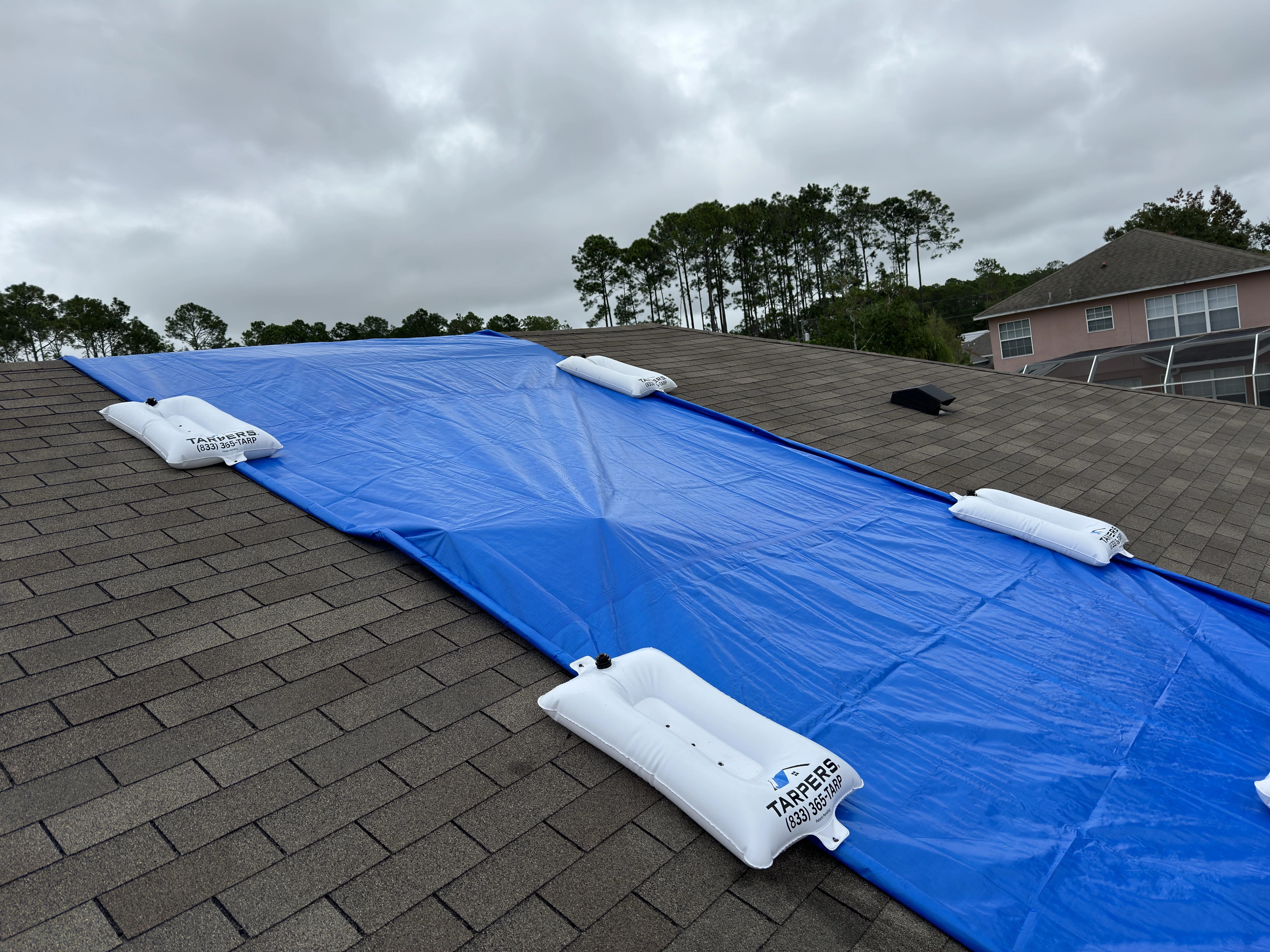
The non-destructive installation method matters here too. A vendor using TarpBags® instead of nail-down fasteners can often complete the installation faster because there's no tear-off, no fastener placement, and no secondary damage risk that slows the crew down. That speed advantage compounds across a large CAT deployment.
Dispatch Time vs. Response Time: A Distinction That Matters
Vendor managers sometimes conflate dispatch time with response time. They're not the same.
Dispatch time is how long it takes the vendor to acknowledge the assignment and confirm a crew is en route. A well-run vendor should confirm dispatch within 30 minutes of assignment during non-CAT and within 2 hours during CAT.
Response time is when the crew physically arrives on site. That's the number that matters for the insured and for secondary damage exposure.
Some vendors report dispatch time as their “response time” metric because it looks better. When you're reviewing vendor SLA benchmarks, ask specifically which clock they're measuring. If a vendor can't separate these two numbers in their reporting, that's a data quality problem worth noting.
For programs that want clean KPI tracking, the insurance vendor portal at Tarpers provides dispatch confirmation timestamps and on-site arrival timestamps as separate fields in every job report.
Documentation Cycle Time: The Overlooked KPI
Claim cycle time doesn't end when the tarp goes on. It ends when the adjuster has what they need to move the file forward. That means documentation cycle time is as important as installation cycle time, and it's where a lot of vendors lose ground.
High-performing vendors deliver:
- Geo-tagged photos of pre-installation damage (minimum 8 to 12 photos)
- Measurements in square feet with roof pitch noted
- Material list with quantities
- Crew sign-off with timestamp
All of this should be in the adjuster's hands within 4 hours of installation completion. Vendors who batch their documentation at end-of-day create unnecessary lag in the claim file. For adjusters working in Symbility or Xactware, clean documentation with accurate measurements means less back-and-forth and faster scope approval.
For documentation standards specific to drone imagery, see Drone Documentation for Emergency Roof Tarping Claims.
You can review Tarpers' documentation standards and track record on the achievements page.
Using These Benchmarks in Vendor Agreements
These numbers are most useful when they're written into vendor agreements as measurable SLAs, not just referenced in conversation. A few practical notes:
Define the clock start. FNOL timestamp from the carrier system is the cleanest reference point. Avoid using “when the vendor receives the assignment” as the start time, since that creates a gap the vendor controls.
Separate non-CAT and CAT thresholds. A single SLA that doesn't distinguish between the two will either be too loose for non-CAT or unrealistic for CAT. Both outcomes create problems.
Require documentation timestamps. If your vendor agreement only measures installation completion and not documentation upload, you're missing half the cycle. Require both, and require them to be system-generated, not self-reported.
Build in a review cadence. Cycle time benchmarks should be reviewed quarterly against actual performance data. Vendors who consistently miss thresholds without documented cause should be flagged for program review. Resources from PLRB and Claims Journal cover vendor performance standards worth referencing.
For the Xactimate line items that correspond to these cycle time phases, see Xactimate Line Items for Emergency Tarping.
What to Ask Your Current Vendors
If you're evaluating your current vendor panel against these benchmarks, a few direct questions cut through the noise:
What is your average dispatch-to-on-site time for non-CAT jobs in the past 90 days? Ask for the actual number, not a range.
What percentage of jobs have documentation uploaded within 4 hours of installation? If they can't answer this, they're not tracking it.
How do you handle jobs where cycle time exceeds your SLA? Is there a notification protocol, or does the adjuster find out when they follow up?
Vendors who answer with specific data are operating at a different level than those who respond with general assurances. That difference shows up in claim cycle time, reinspection rates, and supplement frequency.
Call (833) 365-TARP or visit the insurance vendor page to discuss how Tarpers structures its cycle time reporting for carrier and TPA programs.
Partner With Tarpers
Whether you are an insurance carrier, a TPA, or an adjuster looking for reliable non-destructive tarping vendors, we are here to help. Get in touch with our team.