
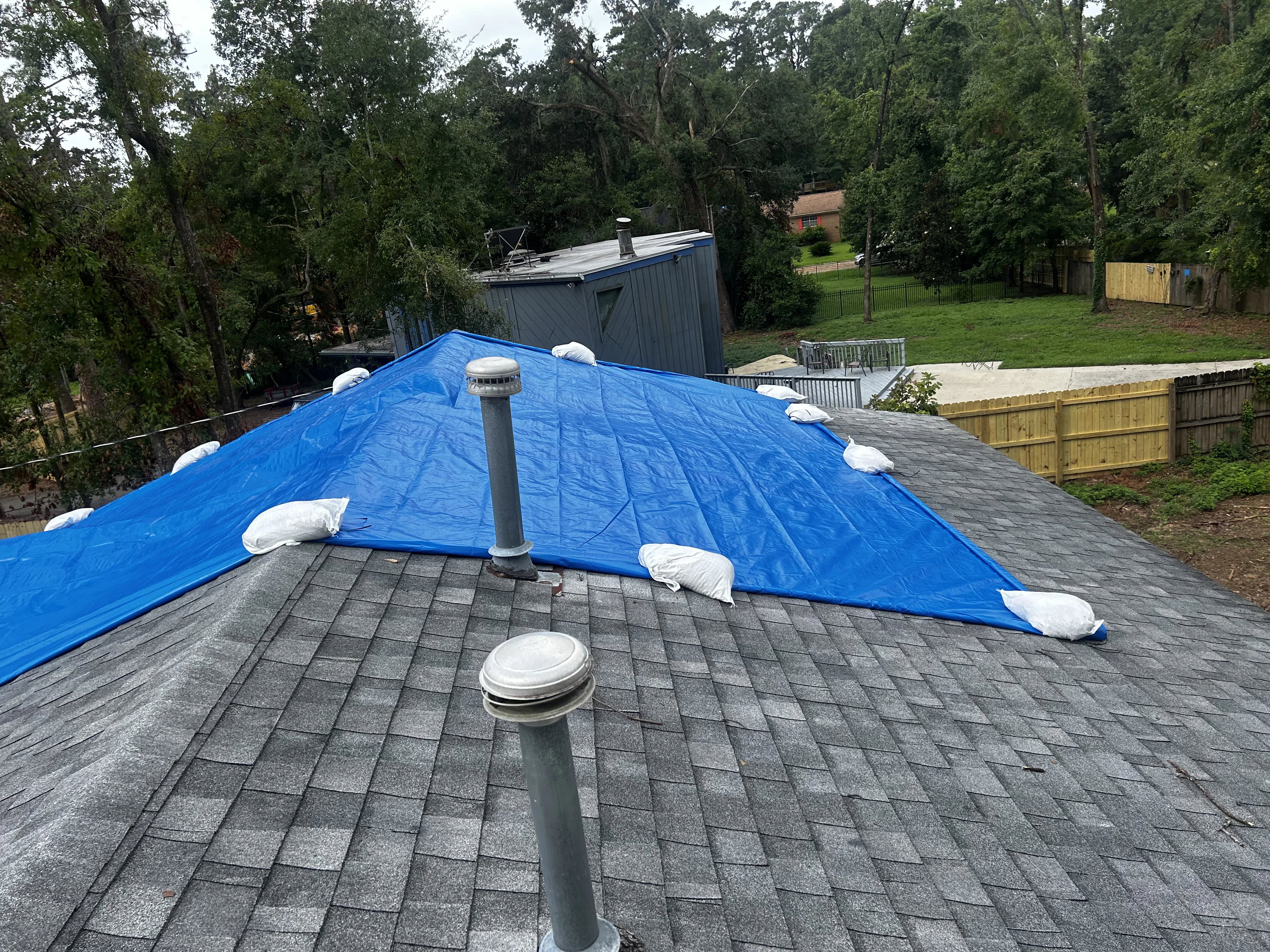
Workers compensation exposure in emergency roof tarping is one of those topics that doesn't get enough attention in vendor management circles. Carriers and TPAs spend considerable time vetting a vendor's licensing, equipment, and response times. But the question of whether that vendor's crew is properly covered under workers comp often gets a quick checkbox and nothing more. That's a gap worth closing.
Roof work consistently ranks among the most hazardous construction activities. Falls from height account for a significant share of construction fatalities each year, and emergency tarping crews operate under conditions that amplify that risk: wet surfaces, steep pitches, storm debris, and time pressure. When a vendor's worker is injured on a claim site, the question of who bears the financial exposure depends entirely on how that vendor's insurance is structured and whether it was verified before dispatch.
Why Carrier Exposure Does Not End at the Claim
When a vendor is dispatched to a loss site, the carrier's direct liability is typically limited to the claim itself. But indirect exposure is real. If a vendor misclassifies workers as independent contractors to avoid workers comp premiums, and one of those workers is injured on a job, the injured party may pursue the property owner or the carrier's insured. That creates downstream complications for the claim, including potential litigation that delays closure and inflates total loss costs.
Some states, particularly in the Southeast, have statutory provisions that can extend liability up the chain when a subcontractor fails to carry required coverage. Florida, for example, has specific rules around contractor and subcontractor coverage obligations. Vendors operating across multiple states need to carry coverage that meets each state's requirements, and that's not always what a single certificate of insurance confirms.
What a Certificate of Insurance Actually Tells You
A COI is a snapshot, not a guarantee. It confirms that a policy existed on the date the certificate was issued. It does not confirm that the policy is still active, that premiums are current, or that the coverage limits are adequate for the scope of work being performed. Vendors who let policies lapse mid-season are more common than most TPA networks would like to admit.
The minimum verification standard should include: confirmation that workers comp coverage is active and not just listed, verification that the policy covers the specific type of work being performed (roofing and tarping, not just general contracting), and a check that the coverage limits are appropriate for the crew size and job scope. Requesting a certificate directly from the insurer, rather than from the vendor, adds a layer of confidence that the document hasn't been altered.
Non-Destructive Methods Reduce Exposure on Multiple Fronts
There's a connection between the tarping method a vendor uses and the injury risk their crew faces. Nail-down tarping requires crews to penetrate the roof surface, which often means more time on the roof, more movement across damaged areas, and more exposure to fall hazards. Non-destructive tarping methods, like those used with TarpBags®, allow crews to secure tarps without penetrating the roof membrane. That means less time on the roof and a more controlled installation process.
From a vendor risk standpoint, a non-destructive method also reduces the chance of a secondary damage claim. If a crew member slips while nailing through a damaged section and causes additional structural damage, that's a separate problem layered on top of the injury. Cleaner methods produce cleaner outcomes, and that matters when you're managing both the claim and the vendor relationship.
What to Verify Before Dispatching a Vendor
Vendor qualification for workers comp coverage should happen before the first dispatch, not after the first incident. A practical verification checklist includes:
Confirm the vendor carries workers comp coverage in every state where they operate. A vendor based in Georgia dispatching crews to Florida needs Florida-compliant coverage, not just a Georgia policy. Verify that the policy covers roofing and tarping specifically, since some general contractor policies exclude certain trades. Check that the certificate lists your TPA or carrier as an additional insured where applicable. Request updated certificates at least annually, and any time a vendor adds crew or expands their service area.
Some TPA networks are moving toward real-time certificate verification through third-party compliance platforms. That's a meaningful improvement over the annual COI request cycle, particularly for vendors who operate in high-volume markets where crew composition changes frequently.
Building Vendor Accountability Into Your Network
The vendors who handle workers comp correctly tend to handle other operational details correctly too. Proper coverage is a proxy for organizational maturity. A vendor who invests in legitimate workers comp coverage, maintains accurate payroll records, and keeps their policy current is also more likely to document jobs thoroughly, respond to adjuster requests promptly, and follow non-destructive installation protocols.
Building that accountability into your vendor network means setting clear expectations upfront, verifying compliance before dispatch, and revisiting compliance at regular intervals. It also means having a clear process for what happens when a vendor falls out of compliance. Removing a vendor from your approved list mid-season is disruptive, but it's less disruptive than managing an uninsured injury claim on top of an active loss.
TarpBags vendors are trained on non-destructive installation methods and operate under documented safety protocols. For insurance partnerships and vendor qualification questions, contact the team at (833) 365-TARP or visit tarpers.com/contact/insurance.
The warranty and service standards page outlines what carriers and TPAs can expect from a TarpBags-certified installation, including documentation practices that support clean claim closure.
Partner With Tarpers
Whether you are an insurance carrier, a TPA, or an adjuster looking for reliable non-destructive tarping vendors, we are here to help. Get in touch with our team.