
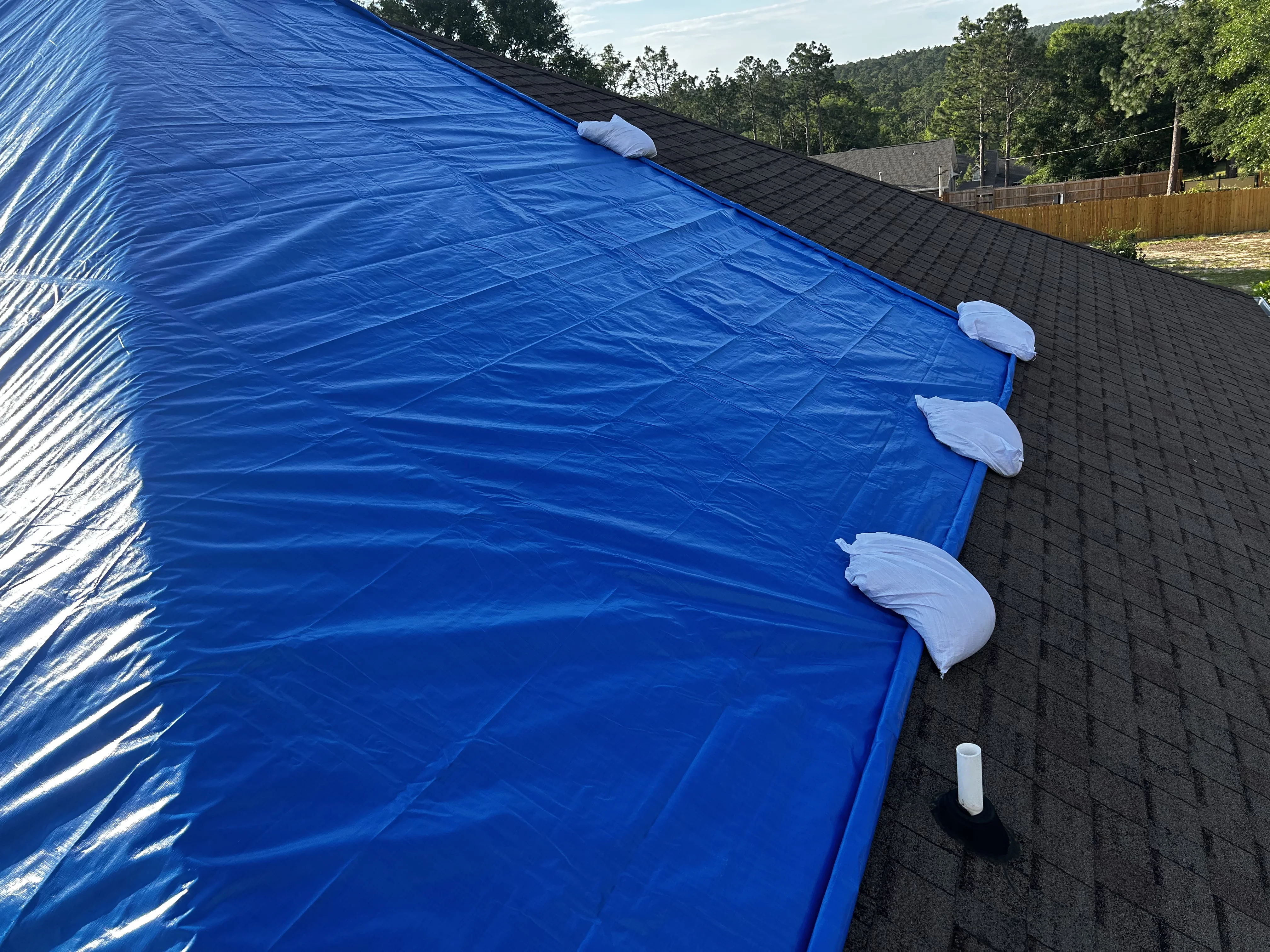
If you're managing a vendor program for emergency tarping, you already know that not every contractor who shows up with a tarp roll is actually qualified to handle a storm-loss roof. The gap between a compliant, documentation-ready tarping vendor and one who creates more problems than they solve is significant. And when a claim goes sideways because of poor workmanship or missing photos, it's your program that takes the heat.
A structured vendor audit gives you a repeatable way to evaluate contractors before they're dispatched, and to hold them accountable after the fact. Here's what a practical audit framework looks like for emergency tarping operations specifically.
Licensing, Insurance, and Business Standing
Start with the basics. A tarping vendor should carry general liability insurance at a minimum of $1 million per occurrence, with your organization listed as an additional insured. Workers' compensation coverage is non-negotiable if they have employees on the roof.
Verify their contractor's license is current in every state where they operate. In Florida, for example, roofing work requires a state-issued license, and tarping falls under that umbrella in most jurisdictions. Ask for a certificate of insurance directly from their carrier, not a copy they hand you. Confirm it's active.
Check their business registration and standing with the state. A vendor who's been operating under multiple entity names or has a history of license lapses is a risk you don't need in your program.
Training, Certification, and Field Competency
Licensing tells you they're legally permitted to work. Training tells you whether they actually know what they're doing. For tarping specifically, look for vendors whose crews have completed IICRC or PLRB training on emergency services and mitigation. The IICRC sets widely recognized standards for mitigation work, and vendors who invest in that training tend to operate more consistently.
Ask how they train new crew members. Is there a structured onboarding process, or do new hires just follow a senior tech around for a week? The answer tells you a lot about how they'll perform when they're dispatched to a loss at 2 AM.
For non-destructive tarping specifically, verify that their crews understand the method. Non-destructive means no fasteners penetrate the existing roof deck or membrane. Boards are used to anchor the tarp at the ridge and perimeter without creating new penetrations. A vendor who defaults to nail-down tarping because it's faster is not a fit for a carrier program that values claims-friendly workflow.
Equipment Standards and Inventory
A vendor's equipment tells you whether they can actually deliver on their commitments. During an audit, ask to see their tarp inventory. What sizes do they carry? What material weight? For most residential and light commercial applications, 6-mil or heavier poly tarps are appropriate. Thinner tarps degrade quickly and won't hold through a second weather event.
Ask about their board supply. Non-destructive tarping requires 2x4 or 2x6 lumber to create the anchor system. A vendor who doesn't carry boards on their trucks is either doing nail-down work or improvising, neither of which is acceptable.
Check their vehicle fleet. Do they have trucks capable of carrying full-size tarps and lumber? Do they have ladders rated for the roof heights they're working on? OSHA ladder safety requirements apply, and a vendor who's cutting corners on equipment is a liability exposure.
Documentation Practices and Claims-Ready Output
This is where most vendor audits fall short. Licensing and equipment are table stakes. Documentation quality is what separates a vendor who helps your claims process from one who creates disputes.
Ask to see a sample job file from a completed loss. It should include pre-installation photos showing the damage condition, photos of the tarp placement and anchor system, post-installation photos from multiple angles, and a written scope of work that matches what was actually done. If the sample file is a handful of blurry phone photos and a handwritten invoice, that's your answer.
Vendors who use TarpBags® as their containment system for debris and removed materials will typically have cleaner job sites and better photo documentation, because the system is designed around a structured workflow. TarpBags integrates with the non-destructive method and produces the kind of before-and-after documentation that holds up in a claim review.
Ask whether their documentation is compatible with Xactimate or Symbility line items. A vendor who can produce a scope that maps directly to your estimating platform saves your adjusters time and reduces supplement disputes.
References and Ongoing Performance Monitoring
Before adding a vendor to your approved list, talk to other carriers or TPAs who've used them. Ask specifically about their performance during high-volume events. A vendor who performs well on routine losses but falls apart during a CAT event is a problem you'll discover at the worst possible time.
Ask for references from adjusters, not just from the vendor's own client list. Adjusters will tell you whether the documentation was clean, whether the vendor was responsive to supplement requests, and whether there were workmanship complaints.
A vendor audit isn't a one-time event. Build a review cycle into your program. Annual re-verification of insurance and licensing is a minimum. For high-volume vendors, quarterly performance reviews based on documentation quality scores and cycle time metrics make sense. Track how long it takes from dispatch to job completion and documentation submission. Vendors who consistently close jobs within your SLA windows and submit complete documentation on the first pass are worth retaining.
For more on what a compliant tarping operation looks like, see our track record and achievements, warranty terms, and insurance partnership contact.
A well-structured vendor audit framework protects your program from workmanship disputes, documentation gaps, and compliance exposure. It also makes it easier to identify the vendors worth investing in for long-term program relationships. If you're building or refining your tarping vendor standards, call us at (833) 365-TARP to talk through what a compliant, claims-ready operation looks like in practice.
Partner With Tarpers
Whether you are an insurance carrier, a TPA, or an adjuster looking for reliable non-destructive tarping vendors, we are here to help. Get in touch with our team.