
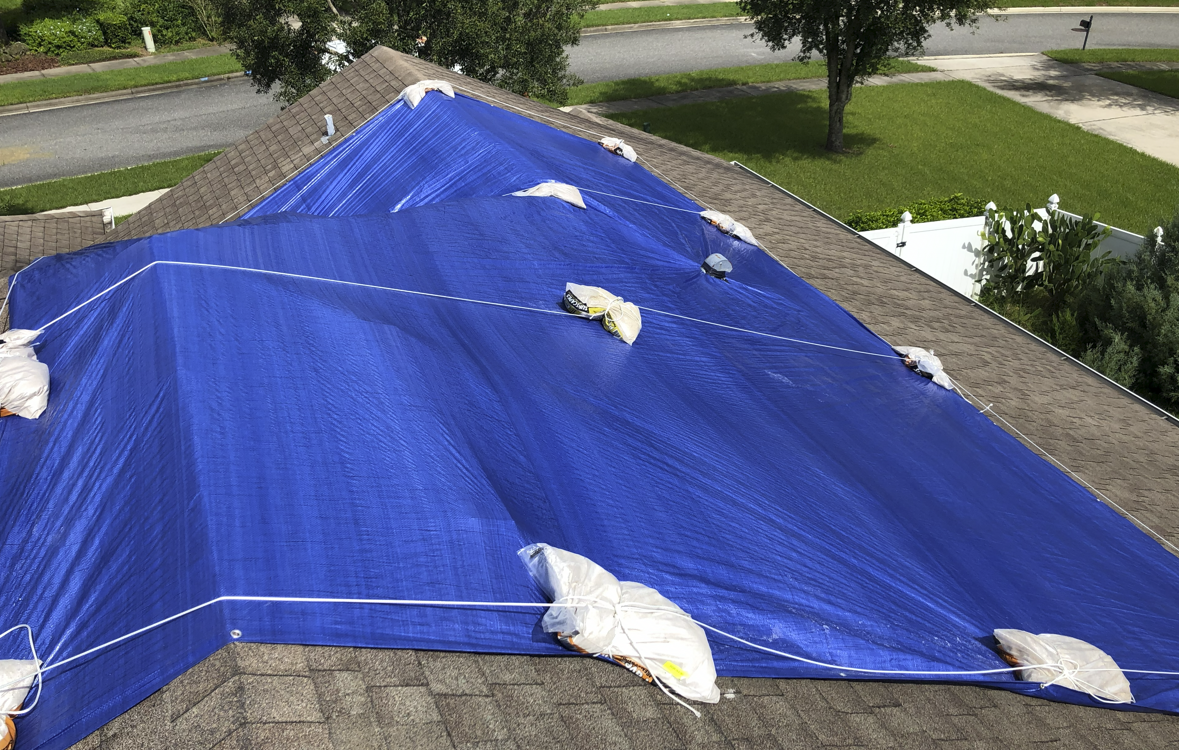
When a nail-down tarp goes on a storm-damaged roof, the crew is usually gone within a few hours. The claim file moves forward. The adjuster closes the temporary protection phase and shifts attention to the repair estimate. Everything looks fine.
Then, six to eighteen months later, the property owner calls back. There is water in the ceiling. A new stain on the drywall. A second claim.
This is not a rare edge case. It is a predictable outcome of how nail-down tarping works, and it is one of the most consistent sources of supplemental claims in residential property insurance. Understanding the mechanism helps carrier field ops, adjusters, and vendor managers make better decisions about which tarping methods they approve and which vendors they route work through.
How the Leak Mechanism Works
When a crew drives nails through a tarp and into a shingle, they create a penetration point. The tarp itself may seal around the nail shaft initially, but that seal is temporary. UV exposure degrades the tarp material. Wind movement works the nail back and forth. Rain cycles wet and dry the shingle around the penetration.
Over weeks and months, the nail shaft corrodes. The corrosion expands the hole slightly. The tarp material around the nail fatigues and pulls away. Water finds the gap.
The shingle below has its own problem. The nail punched through the granule layer and into the substrate. That penetration does not self-seal. It sits there, exposed to every rain event, slowly wicking moisture into the decking below.
By the time the property owner notices a stain on the ceiling, the water has been moving through that path for a while. The decking may be soft. There may be moisture damage beginning in the attic space. What started as a nail hole from a temporary tarp has become a secondary loss event.
Why the Timeline Matters for Claims
The six to eighteen month window is significant for a few reasons.
First, it falls outside the typical claim cycle. The original storm claim is usually closed or in late-stage repair by the time the secondary leak appears. The property owner files a new claim. The carrier has to determine whether this is a new event or a continuation of the original loss. That determination takes adjuster time, documentation, and sometimes litigation.
Second, the delay makes causation harder to establish. The original tarp crew is long gone. The tarp itself may have been removed during repairs. The nail holes in the shingles are the only physical evidence of what happened, and they can be easy to miss during a standard inspection.
What Adjusters and Vendor Managers Should Know
If you are reviewing a supplemental claim that involves water intrusion at a property that had a nail-down tarp installed after a prior storm, the nail penetrations are worth examining before the claim is categorized as a new event.
Look for rust staining around nail heads in the shingle field. Look for soft spots in the decking directly below where the tarp was anchored. Check whether the leak location corresponds to the tarp perimeter rather than the original storm damage area.
These are not always easy to identify, especially if the original repair work has already been completed. But when the pattern is present, it changes the claim analysis significantly.
For vendor managers and carrier field ops, the more useful intervention happens before the tarp goes on. Approving non-destructive tarping methods for your vendor network eliminates this failure mode entirely. If no nails go through the roof surface, there are no nail penetrations to produce delayed leaks.
The Non-Destructive Alternative
TarpBags® are water-fillable anchoring bags that secure tarp edges without penetrating the roof surface. Crews carry the empty bags up the ladder, position them along the furring strips that hold the tarp in place, and fill them with water from a garden hose on the roof. The weight of the filled bags holds the tarp down through wind and rain without introducing any new holes into the shingle layer.
The method is non-destructive. It works with standard Xactware and Symbility line items for temporary roof protection. The documentation workflow is straightforward for adjusters: the tarp goes on, the claim file reflects a non-penetrating installation, and the temporary protection phase closes without creating a future liability.
When the tarp comes off, the roof is in the same condition it was in before the tarp went on. No nail holes. No rust staining. No delayed leak path waiting to activate six months later.
The Supplemental Claim Cost
The financial case for non-destructive tarping is not complicated. A supplemental claim driven by tarp nail penetrations typically involves a second adjuster visit, additional documentation, possible interior remediation, and repair costs that were not in the original estimate. Depending on the extent of the secondary damage, the supplemental can approach or exceed the cost of the original repair.
Multiply that across a book of business in a high-frequency storm market like Florida or the Southeast, and the aggregate cost of nail-down tarp failures becomes meaningful. Carriers and TPAs that have moved their vendor networks toward non-destructive methods report fewer supplemental filings in the six to eighteen month window after major weather events.
That is not a coincidence. It is the mechanism working in reverse: no nail penetrations means no delayed leak paths means no secondary claims.
Making the Change
Transitioning a vendor network to non-destructive tarping does not require a major operational overhaul. Most crews learn the TarpBags® method in a single training session. The equipment is lighter than sandbags and easier to transport. Installation time is comparable to nail-down methods on most residential roofs.
The harder part is updating approval criteria and documentation standards so field adjusters know what to look for. Tarpers works directly with carrier and TPA partners on that process.
If you are managing a vendor network or reviewing tarping standards for your claims operation, the Tarpers insurance partnerships team can walk through the method, the documentation workflow, and the field logistics. You can also review the TarpBags® product page for technical specifications, or look at the tarping method overview for a comparison of installation approaches.
For questions about specific claim scenarios or vendor qualification, call (833) 365-TARP.
The six to eighteen month leak problem is predictable. It is also preventable. The method that goes on the roof in the days after a storm determines whether the claim file stays closed or reopens a year later.
Partner With Tarpers
Whether you are an insurance carrier, a TPA, or an adjuster looking for reliable non-destructive tarping vendors, we are here to help. Get in touch with our team.