
Setting reserves on hurricane roof claims is one of the more technically demanding tasks in property catastrophe response. The variables are real, the timelines are compressed, and the cost of getting it wrong compounds quickly. Whether you're a field adjuster setting initial case reserves or a claims manager reviewing a CAT portfolio, a consistent framework for mitigation costs makes a measurable difference in accuracy.
This post walks through the key cost variables that affect reserve setting on hurricane roof claims, with a focus on the emergency tarping phase that most carriers underestimate.
Why Mitigation Costs Get Underestimated
The most common reserve shortfall on hurricane roof claims isn't in the repair estimate. It's in the mitigation line. Emergency tarping is often treated as a flat-rate item, but the actual cost varies significantly based on roof geometry, access conditions, debris load, and the method used.
Nail-down tarping creates secondary damage that has to be accounted for in the reserve. Every penetration through the existing roof surface is a potential additional repair item. If the adjuster sets the mitigation reserve based on a standard tarping rate without accounting for the method, the reserve is almost certainly short.
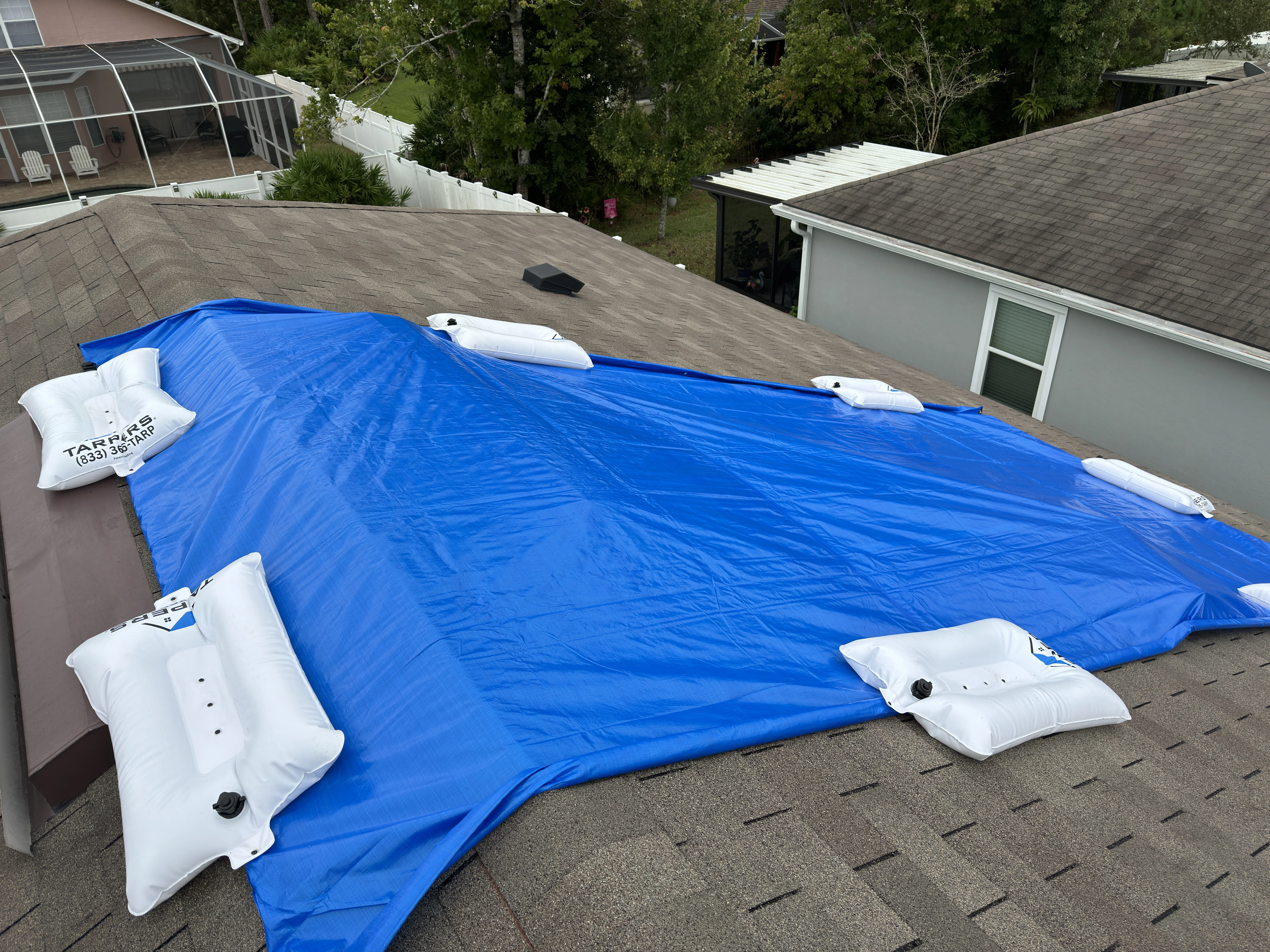
Non-destructive tarping methods, like those used by TarpBags®, avoid this problem entirely. The system uses weighted bags rather than fasteners, so there's no additional penetration damage to reserve for. That's a meaningful difference when you're setting reserves across hundreds of claims in a CAT event.
The Core Reserve Components for Hurricane Roof Claims
A complete reserve on a hurricane roof claim should account for at least four cost categories: emergency mitigation, temporary protection maintenance, permanent repair or replacement, and interior damage from any water intrusion that occurred before or during the mitigation window.
Emergency mitigation covers the initial response, typically within 24 to 72 hours of the event. The reserve here should reflect the actual method being used by the responding vendor, not a generic line item. A non-destructive system costs differently than a nail-down system, and the downstream repair implications are different too.
Temporary protection maintenance is often missed entirely. A tarp installed after a hurricane isn't a permanent fix. It's protection measured in weeks to a few months, depending on weather conditions and installation integrity. If the permanent repair is delayed, the reserve should include at least one maintenance inspection and potential re-securing of the temporary protection.
Interior damage reserves depend heavily on how quickly mitigation was deployed. A 24-hour response with a properly installed non-destructive tarp produces a very different interior damage profile than a 72-hour response with a compromised installation. Documenting the response timeline and the condition of the temporary protection at installation is essential for supporting the interior reserve.
Mitigation Cost Variables That Affect Reserve Accuracy
Several specific variables drive mitigation cost variance on hurricane roof claims. Roof pitch is one of the most significant. A low-slope commercial roof and a steep residential roof require different equipment, different crew configurations, and different installation time. A flat-rate reserve doesn't account for this.
Roof access is another variable adjusters sometimes overlook at the initial inspection. If the property has limited access due to debris, downed trees, or structural instability, the mitigation cost goes up. That should be reflected in the reserve, not treated as a supplement after the fact.
Debris load matters too. Post-hurricane roofs often have significant debris that has to be cleared before any temporary protection can be installed. That labor is part of the mitigation cost and should be in the reserve from the start.
The size of the affected area drives cost more directly than almost any other variable. A partial roof loss and a full roof loss require very different tarping scopes. Getting an accurate measurement at the initial inspection, or using aerial imagery when available, gives you a more defensible reserve.
Documentation Standards That Support Reserve Accuracy
The reserve is only as good as the documentation behind it. For hurricane roof claims, that means capturing the roof condition at the initial inspection, the scope of the temporary protection installed, the method used, and the timeline from loss to mitigation.
TarpBags® installations include photo documentation of the installation, which supports both the mitigation reserve and any subsequent interior damage claims. When the documentation shows a non-destructive installation completed within 24 hours of the loss, the reserve for secondary damage can be set more conservatively. When documentation is absent or shows a delayed response, the reserve needs to account for a wider range of potential interior damage.
Platforms like Symbility and Xactware both have line items for emergency tarping, but the default rates don't always reflect the actual cost of a non-destructive installation on a complex roof. Adjusters should verify that the line item reflects the actual scope and method, not just the default rate.
Reserve Review Triggers for Hurricane Roof Claims
Even a well-set initial reserve needs review triggers built in. For hurricane roof claims, the most common triggers are: a delay in permanent repair authorization beyond 60 days, a second weather event affecting the property while temporary protection is in place, and any change in the scope of the permanent repair estimate.
Each of these can materially affect the total reserve. A delay in permanent repair means the temporary protection has been in service longer than anticipated, increasing the probability of a maintenance issue. A second weather event is a direct reserve trigger. A scope change on the permanent repair often means the initial damage assessment missed something, which may also affect the interior damage reserve.
Building these triggers into your CAT claims workflow, rather than waiting for a supplement, keeps reserves more accurate throughout the life of the claim.
Putting the Framework Into Practice
A consistent reserve framework for hurricane roof claims needs to account for the actual mitigation method and scope, include a maintenance allowance for temporary protection, reflect the documented response timeline, and have defined review triggers for common scope changes.
Working with vendors who use non-destructive methods and provide thorough documentation reduces the variables you have to estimate and gives you a cleaner paper trail if the reserve is ever questioned.
For more on how Tarpers supports catastrophe response operations, visit our catastrophe response services page. If you're a carrier or TPA looking to establish a preferred vendor relationship, our insurance vendor partnerships page has the details.
Reach us directly at (833) 365-TARP. We work with adjusters, vendor managers, and claims leadership teams across Florida and the Southeast to support efficient, well-documented hurricane response.
Partner With Tarpers
Whether you are an insurance carrier, a TPA, or an adjuster looking for reliable non-destructive tarping vendors, we are here to help. Get in touch with our team.