
Every adjuster has seen it: a claim that should close in two weeks drags on for two months because nobody can agree on what the roof looked like before the storm. Pre-loss condition is the baseline everything else gets measured against. Without it, you're negotiating in the dark, and the policyholder's contractor is usually better prepared for that conversation than you are.
The gap between pre-loss and post-loss documentation isn't a paperwork problem. It's a scope problem, a reserve problem, and sometimes a litigation problem. Closing it requires a structured approach that starts before the first adjuster boots hit the roof.
What Pre-Loss Documentation Actually Means in Practice
Pre-loss documentation is any verifiable record of the property's condition before the covered event. In an ideal world, you'd have a recent inspection report, satellite imagery, or a prior claim file. In practice, you're often working with whatever the carrier's underwriting file contains, which may be years old.
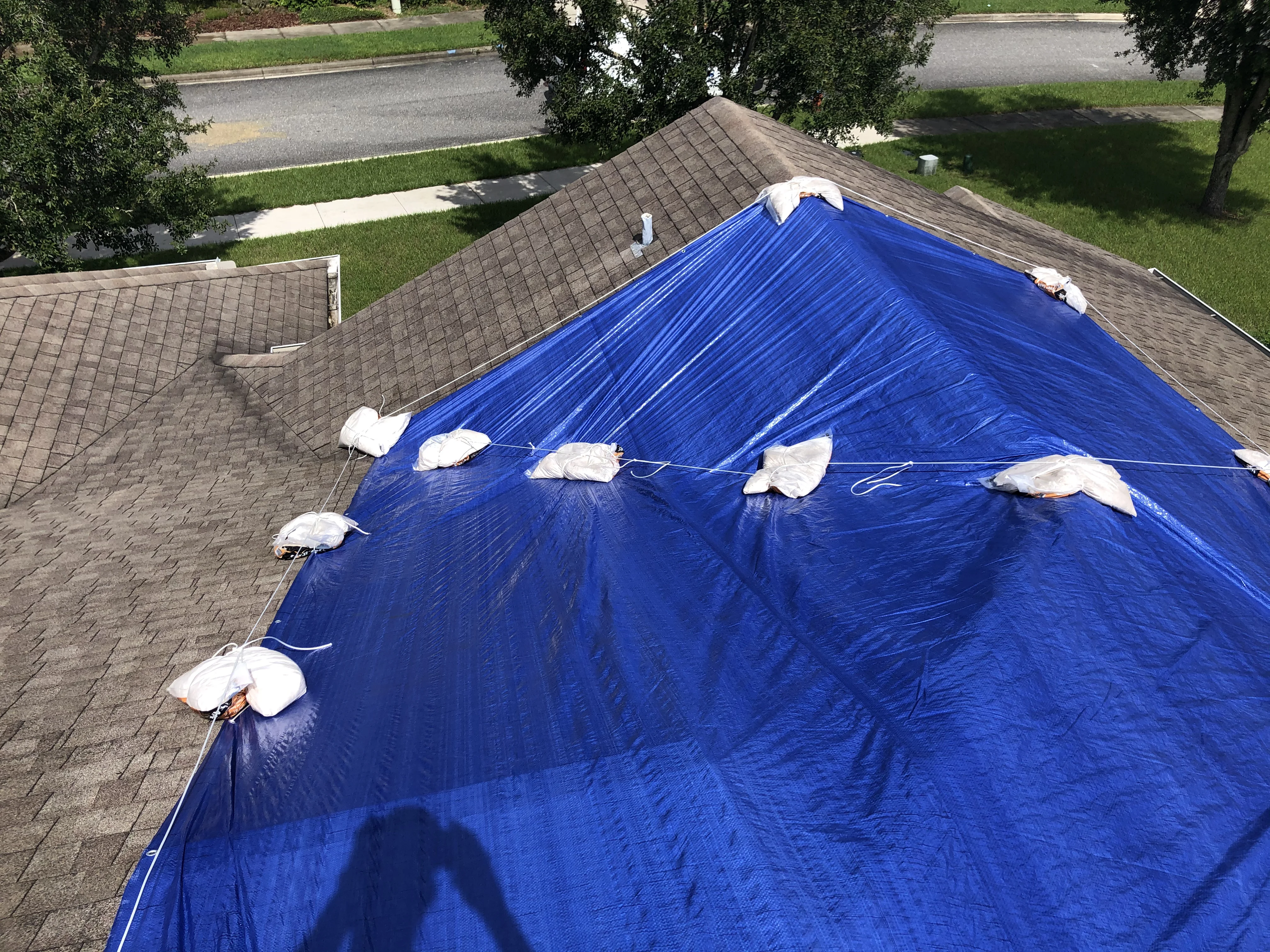
That's why the first 24 to 48 hours after a loss matter so much. A non-destructive emergency tarping crew that arrives early can capture the pre-repair condition of the roof before any mitigation work disturbs the evidence. TarpBags® crews are trained to photograph the roof surface, ridge line, flashing, and penetrations before placing a single bag. That sequence, documented with timestamps and GPS coordinates, becomes part of the claim file.
Adjusters who work with vendors that follow this protocol consistently report fewer scope disputes. The photos don't just show damage. They show what was already there.
The Post-Loss Documentation Standard That Holds Up
Post-loss documentation needs to answer three questions: what failed, why it failed, and what it will cost to restore the property to its pre-loss condition. Most photo sets answer the first question adequately. Fewer answer the second. Almost none are structured to answer the third in a way that survives a desk review.
A defensible post-loss photo set includes:
- Wide-angle establishing shots from all four compass points
- Mid-range shots of each damage zone with a reference scale
- Close-up shots of failure points, including fastener pull-through, membrane tears, and flashing separation
- Interior shots showing any water intrusion path from roof to ceiling
- Timestamps, GPS coordinates, and adjuster or vendor ID on every image
When you're working in Xactware or Symbility, this structure maps directly to line items. A photo of a specific failure zone tied to a specific line item is much harder to dispute than a general “storm damage” notation. Platforms like Symbility allow you to attach photos directly to scope line items, which is worth using consistently.
Where the Documentation Gap Opens Up
The gap usually opens in one of three places. First, when the emergency vendor and the adjuster aren't coordinating on photo standards. The vendor captures what they need for their invoice. The adjuster captures what they need for the scope. Neither set is complete on its own.
Second, when there's a delay between the loss event and the first site visit. Every day of exposure changes the condition of the roof. Rain, UV, and foot traffic all alter the evidence. A tarp installed on day one preserves the post-loss condition. A tarp installed on day five is protecting a roof that's already changed.
Third, when the documentation doesn't distinguish between pre-existing conditions and storm damage. This is where claims get contested most aggressively. If your photo set doesn't clearly show the boundary between old wear and new damage, you're giving the opposing party room to argue.
Non-destructive tarping methods help here in a specific way. Because TarpBags don't require nailing through the roof surface, the underlying damage pattern is preserved intact under the tarp. When the adjuster or engineer inspects later, the evidence hasn't been altered by the mitigation work itself.
Building a Documentation Protocol That Works Across Your Vendor Network
If you're managing a panel of emergency tarping vendors across multiple states, documentation consistency is one of the hardest things to enforce. Every vendor has their own habits. Some are excellent. Some submit a dozen blurry photos and call it done.
The most effective approach is a standardized photo checklist that vendors complete before and after every job, with submission required before invoice approval. The checklist should specify shot angles, required reference objects, and file naming conventions. Vendors who can't meet the standard don't stay on the panel.
Internal links worth reviewing: the photos and documentation guide covers naming conventions and file organization in detail. The completed projects gallery shows what a well-documented job looks like from start to finish.
For external reference, the Property Loss Research Bureau publishes guidance on documentation standards that aligns with what most carriers expect from their vendor networks.
Connecting Documentation to Cycle Time
There's a direct relationship between documentation quality and claim cycle time. Claims with complete, structured photo sets close faster. The desk reviewer can approve the scope without a callback. The supplement, if there is one, is supported by evidence rather than argument.
Carriers and TPAs that have moved to structured documentation protocols with their emergency vendors report measurable reductions in cycle time. The investment is in the protocol, not in more photos. More photos without structure just creates more noise.
TarpBags crews operating under the non-destructive method generate a consistent documentation package: pre-installation photos, installation photos with bag placement visible, and post-installation photos showing the secured perimeter. That package is designed to drop directly into a claim file without additional processing.
You can't control what documentation existed before the loss. You can control what gets captured in the first 48 hours after it. Coordinate with your emergency vendor on photo standards before they arrive on site, not after. Make sure your vendor's documentation and your own are structured to answer the same three questions: what failed, why it failed, and what it will cost to restore.
If you're working with a vendor that can't tell you their documentation protocol before they start, that's worth knowing. Call (833) 365-TARP to talk through how Tarpers structures the documentation handoff for insurance professionals. The goal is a claim file that closes on the first review, not the third.
Partner With Tarpers
Whether you are an insurance carrier, a TPA, or an adjuster looking for reliable non-destructive tarping vendors, we are here to help. Get in touch with our team.