
Carriers should hold every emergency tarping vendor to written standards for general liability, workers compensation, auto liability and surety bonding, and should verify those records directly with the insurer before the first dispatch. Tarpers, an emergency roof tarping company serving carriers in Florida, Texas, Louisiana, Georgia and other states, supports that review as part of vendor onboarding. This guide covers what mitigation vendor bonding and insurance standards should include, how to verify them, and how to keep them current through a storm season.
Vendor managers already screen for response time, crew capacity and documentation quality. Insurance and bonding records get less attention because they arrive as a single PDF during onboarding and then sit in a file. That is where lapses hide. A vendor who looked complete in March can be out of compliance by September, right when your claim volume peaks.
What insurance should a carrier require from a mitigation vendor?
Carriers should require proof of commercial general liability, workers compensation, commercial auto liability and, where the program calls for it, a surety bond. The right limits depend on the carrier's own risk standards, the states served and the type of work, so each program should set its minimums in writing rather than accept whatever a vendor happens to carry.
Here is what each line protects against in plain terms:
- General liability responds when a vendor's work causes damage to property or injury to a third party at the loss site.
- Workers compensation responds when a crew member is hurt on the job. Roof work is high risk, and an uninsured injury on a claim site creates problems that can delay claim closure.
- Commercial auto matters because tarping crews drive trucks and trailers loaded with material across storm zones, often for long hours.
- Umbrella or excess liability extends limits above the primary lines and is common in programs that assign a high volume of work to one vendor.
Your written standard should also name the trades included. A general contractor record that excludes roofing work does not match the risk of a crew on a damaged roof.
How does a surety bond differ from insurance?
A surety bond guarantees that a vendor will meet an obligation, while insurance pays for losses. The Insurance Information Institute glossary describes a surety bond as a three party agreement in which the surety company answers to the owner or obligee for a third party's default or nonperformance.
For a vendor program, that distinction matters. Insurance addresses accidents and injuries. A bond addresses whether the vendor does what it agreed to do. Some carriers and state licensing rules call for bonds; others rely on contract terms and vendor scorecards. Decide which applies to your program and put it in the vendor agreement.
How should carriers verify mitigation vendor bonding and insurance?
Verify at the source. A certificate of insurance is a snapshot: it shows what was in force on the day it was issued, not whether premiums are still being paid today. The strongest verification process has four parts:
- Request certificates from the insurer or agent, not the vendor. A certificate sent directly by the agent is harder to alter and confirms the agent relationship is real.
- Check the insurer's standing. The National Association of Insurance Commissioners is made up of the chief insurance regulators from the 50 states, the District of Columbia and five U.S. territories. Its consumer tools and each state insurance department can help confirm that an insurer is licensed to write business in the state.
- Match names and addresses. The named insured on every certificate should match the legal entity in your vendor agreement. A mismatch often means a parent company, an old entity or a subcontractor.
- Confirm additional insured status where your program requires it, and keep the endorsement itself on file, not just the checkbox on the certificate.
What catches a lapse before it becomes a claim problem?
Expiration tracking and notice requirements catch most lapses. Build a calendar of every expiration date in your vendor file and request renewed certificates at least 30 days before each one. Ask agents to notify you directly if a vendor's insurance is cancelled or not renewed.
Many programs also require updated certificates whenever a vendor adds crews, enters a new state or brings on subcontractors. That last point is the one most often missed. If a vendor subcontracts during a surge, the subcontractor's workers compensation and liability records need the same review as the prime vendor's.
Why do insurance standards matter most during a hurricane surge?
Surge is when vendors stretch. After a major hurricane, some vendors add temporary crews, subcontract work or expand into states they do not normally serve, and each of those moves can outrun the insurance they carry. A vendor that verified cleanly in the spring may be dispatching crews in a new state by fall.
Tarpers has completed more than 1,000 tarp assignments across seven named storms, including more than 475 assignments in under two months after Hurricane Milton. At that pace, the vendor records behind each crew matter as much as the tarp itself. Carriers that verify before storm season avoid pausing dispatch in the middle of a surge to chase paperwork.
How does installation method affect vendor risk?
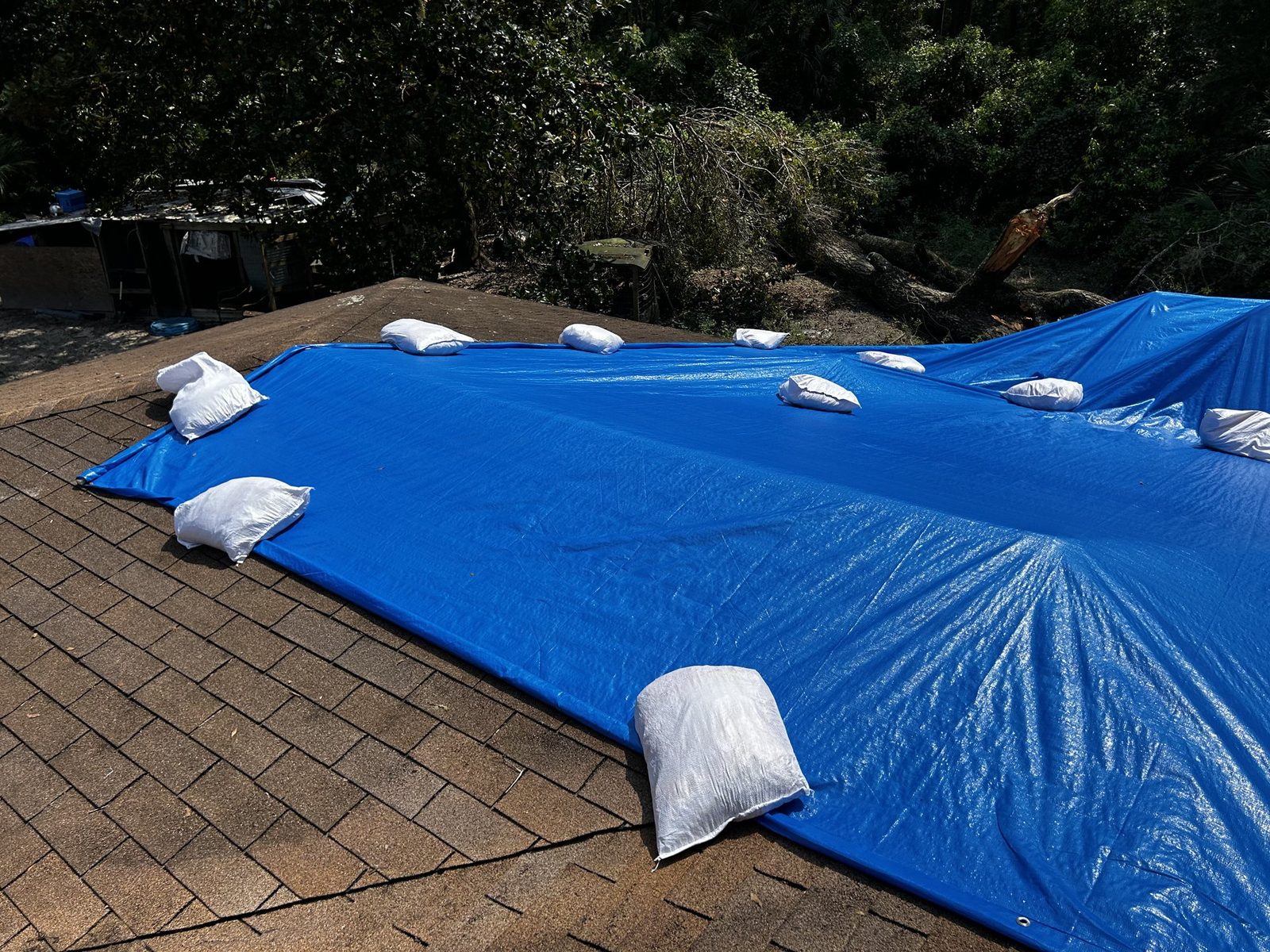
Installation method affects how long crews stay on the roof and how much secondary damage they can cause. Tarpers anchors tarps with TarpBags® or sandbags, chosen by job and logistics, which avoids driving fasteners through an already damaged roof. Fewer penetrations mean less new damage to document and less time spent working across compromised decking.
That does not replace insurance or bonding, but it lowers the odds that either will be needed. When you evaluate vendors, ask how they secure tarps, how long a typical install takes, and how they photograph and report each job.
A simple standard for your vendor file
A practical vendor file for emergency mitigation work includes:
- Current certificates for general liability, workers compensation, commercial auto and any umbrella, sent by the agent
- Written minimum limits that match your program, with the trades included
- Bond documentation if your program or the state requires it
- Additional insured endorsements where required
- An expiration calendar with renewal requests sent 30 days ahead
- A requirement to disclose subcontractors and submit their records before they work a claim
Programs that keep this file current can add capacity quickly after a storm without taking on unknown risk.
Bring Tarpers into your vendor review
Tarpers works with carriers that expect a vendor to hold up under review. See how we support carrier programs on our insurance vendor services page, read our warranty, and review our storm response record. To start vendor onboarding, contact our insurance partnerships team or call (833) 365-TARP.
Frequently asked questions
How does a surety bond differ from insurance?
A surety bond guarantees that a vendor will meet an obligation, while insurance pays for losses. Insurance addresses accidents and injuries. A bond addresses whether the vendor does what it agreed to do.
How should carriers verify mitigation vendor bonding and insurance?
Verify at the source. A certificate of insurance is a snapshot: it shows what was in force on the day it was issued, not whether premiums are still being paid today. Request certificates from the insurer or agent, not the vendor.
What catches a lapse before it becomes a claim problem?
Expiration tracking and notice requirements catch most lapses. Build a calendar of every expiration date in your vendor file and request renewed certificates at least 30 days before each one.