
Why Vendor Network Design Matters More Than You Think
When a catastrophe event hits, the quality of your emergency tarping response depends less on any single contractor and more on the network you built before the storm. Carriers and TPAs that treat vendor panel design as an afterthought tend to find out the hard way: capacity gaps, inconsistent documentation, and claim files that don't hold up to scrutiny.
Building a reliable emergency tarping vendor network isn't complicated, but it does require deliberate structure. This post walks through the core elements: geographic coverage, capacity tiers, performance standards, and how TarpBags® non-destructive method fits into a modern vendor program.
Geographic Coverage: Think in Tiers, Not Dots on a Map
A common mistake is mapping vendor coverage by county and calling it done. What matters operationally is response time, not just presence. A contractor based in Orlando can technically cover Volusia County, but if they're already deployed on a CAT event in Brevard, that coverage is theoretical.
Structure your geographic coverage in concentric tiers:
Primary zone: Vendors who can respond within four hours under normal conditions. These are your first-call contractors for everyday claims.
Secondary zone: Vendors who can reach the loss site within eight hours. They absorb overflow when primary vendors are at capacity.
Surge capacity: Pre-vetted out-of-state contractors who can mobilize for declared CAT events. These relationships need to be established before the event, not during it.
For Florida and the Southeast, this means thinking about I-4 corridor saturation during hurricane season. If every vendor on your panel is based in the same metro, you don't have a network. You have a cluster.
Capacity Tiers: Know What Each Vendor Can Actually Handle
Vendor capacity isn't just headcount. It's equipment, trained crews, and the ability to document work correctly under field conditions. A vendor with ten crews who can't produce a compliant photo set is a liability, not an asset.
When building your panel, collect capacity data at the vendor level: maximum simultaneous jobs per day under normal conditions, surge capacity with 24-hour notice, equipment inventory (tarps, TarpBags units, ladders, safety gear), and documentation capability (photo workflow, measurement tools, report turnaround).
This data lets you route assignments intelligently. High-complexity losses with steep pitches or multi-story structures go to vendors with the right equipment and experience. Straightforward single-story jobs can go to newer panel members building their track record.
Capacity data also helps you identify gaps before a CAT event exposes them. If your panel can handle 40 simultaneous jobs in the Tampa Bay area but a major storm generates 200 assignments in 48 hours, you need to know that in advance, not when your adjuster queue is backed up.
Performance Management: What Gets Measured Gets Done
A vendor panel without performance standards is just a list of phone numbers. Carriers and TPAs that run effective programs track a small set of metrics consistently.
Response time: Time from assignment to on-site arrival. Four hours is a reasonable benchmark for non-emergency daytime assignments. Overnight and weekend response windows should be defined in your vendor agreement.
Documentation quality: Are photo sets complete? Do they include pre-work conditions, measurements, material placement, and post-work confirmation? Incomplete documentation creates supplement disputes and delays.
Non-destructive compliance: If your program specifies non-destructive tarping methods, are vendors actually using them? TarpBags non-destructive method eliminates nail penetration, which protects the underlying structure and keeps the claim file clean. Verify compliance through photo review, not just vendor attestation.
Cycle time: How long from assignment to completed, documented job? Delays in tarping extend secondary damage exposure. Vendors who consistently run long cycle times need coaching or reassignment.
Review these metrics quarterly under normal conditions and after every CAT event. Vendors who perform well under surge conditions are worth more than their day-rate suggests. Vendors who fall apart under pressure cost you more than their invoices.
Non-Destructive Method as a Program Standard
More carriers are specifying non-destructive tarping in their vendor agreements, and for good reason. Nail-down tarping creates additional penetrations in an already-compromised roof. When the claim goes to repair, those penetrations are part of the scope. When the tarp fails early because it was improperly secured, secondary damage follows.
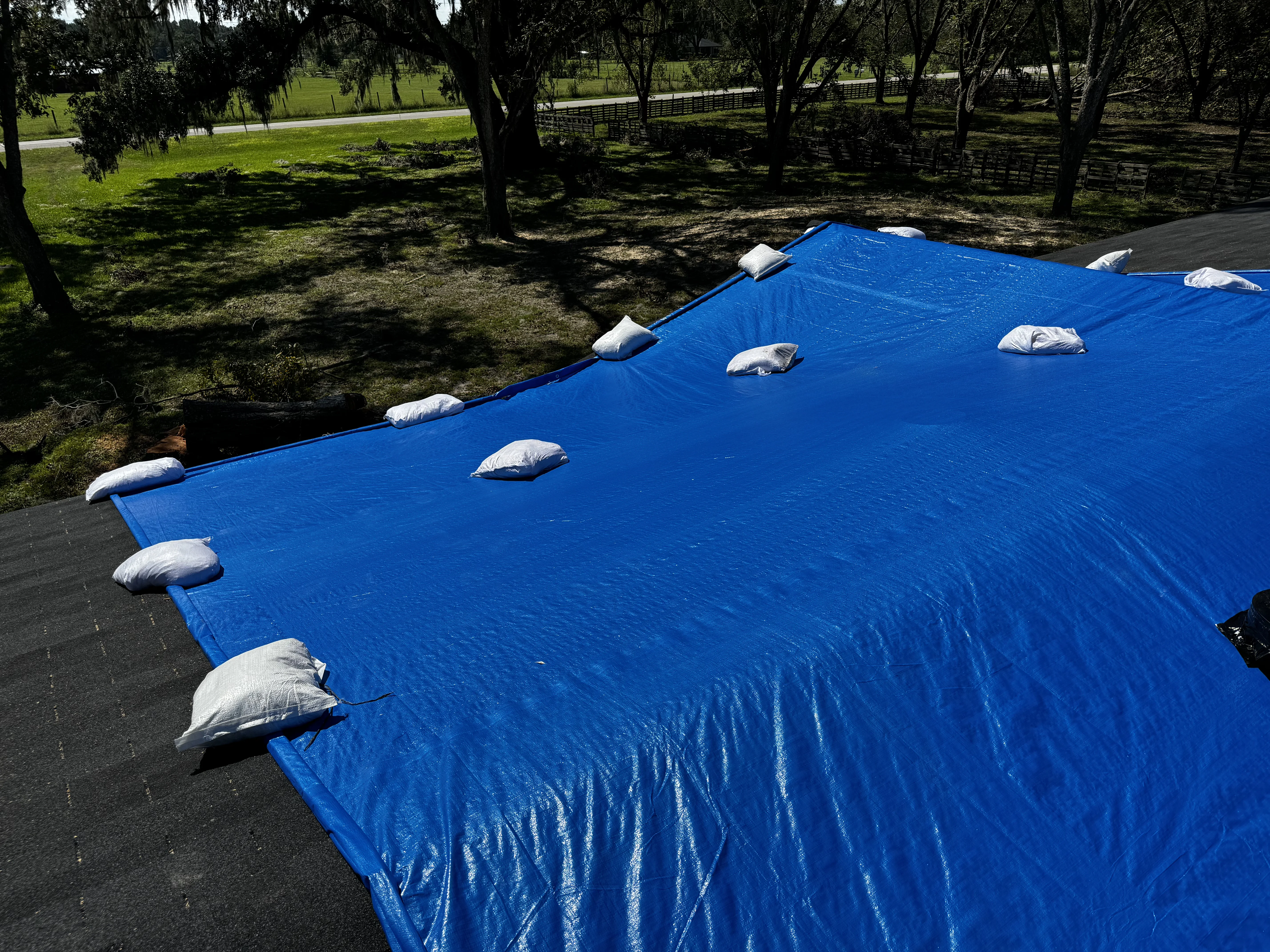
TarpBags non-destructive method uses water-filled ballast bags to anchor tarps without any fasteners penetrating the roof surface. The system works on most residential and light commercial roof types, installs quickly, and produces a clean photo record that supports the claim file rather than complicating it.
For vendor program managers, specifying TarpBags as the required method (or at minimum an approved method) gives you a consistent documentation baseline across your panel. Every job looks the same in the claim file. Adjusters know what to expect. Supplements are easier to evaluate.
If you're building a new vendor program or refreshing an existing one, this is worth including in your vendor agreement language from the start.
Onboarding and Ongoing Qualification
A vendor panel is only as good as its onboarding process. Vendors who pass a background check and sign an agreement aren't necessarily ready to handle your claims correctly. Build a qualification process that includes documentation training (what a compliant photo set looks like), method certification (non-destructive technique, if required), a supervised first assignment with feedback, and clear escalation paths for unusual conditions.
Ongoing qualification matters too. Annual recertification, periodic field audits, and post-CAT debriefs keep your panel sharp. Vendors who invest in their own training and equipment tend to perform better and stay on panels longer.
Connecting Vendor Performance to Claim Outcomes
The strongest argument for investing in vendor network design is the connection to claim outcomes. Well-documented, non-destructive tarping jobs close faster, generate fewer supplements, and produce fewer disputes. Vendors who perform consistently reduce the administrative load on your adjusters.
For carriers managing large volumes of weather-related claims in Florida and the Southeast, this isn't a marginal improvement. It's a meaningful operational difference. A vendor panel that performs at 90% documentation compliance versus 70% compliance translates directly to adjuster capacity and cycle time.
If you're evaluating your current vendor program or building one from scratch, Tarpers works with carriers and TPAs to structure non-destructive tarping programs across Florida and the Southeast. Our crews use TarpBags on every job, and our documentation workflow is built around claim file requirements.