
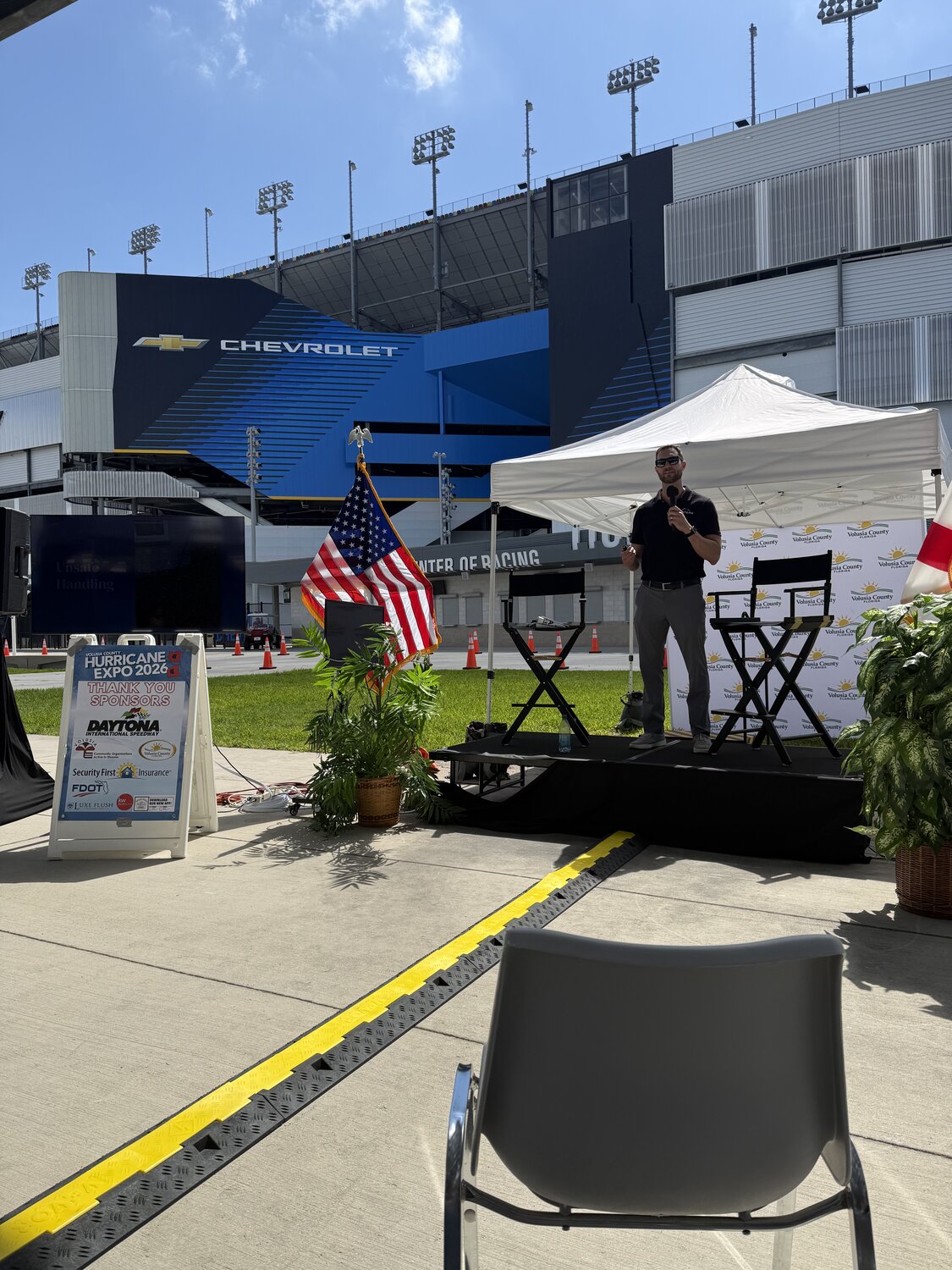
Tarpers recently participated in the Volusia Hurricane and Disaster Preparedness Expo at Daytona International Speedway, joining homeowners, emergency management teams, and industry professionals focused on improving hurricane preparedness and post storm response.
Our President, Steve Lofvers, presented on a critical but often overlooked topic in storm response and property insurance: how to properly secure damaged roofs immediately after a hurricane to prevent additional loss.
The reality of post storm roof damage
Following a hurricane, roof damage is one of the most common drivers of property insurance claims. Even minor roof damage can allow water intrusion within hours, leading to interior damage, secondary water damage, and significantly higher claim severity.
For insurance carriers, adjusters, and restoration professionals, this creates a consistent challenge. Delays in temporary mitigation often result in avoidable secondary damage, increased loss costs, and more complex claims handling.
The presentation focused on a key concept. The majority of preventable damage occurs after the storm has passed.
Common failures in emergency roof tarping
Based on field experience across hurricane events, several issues continue to impact both homeowners and insurance outcomes:
- Delayed installation of roof tarps after storm damage
- Use of nail based tarping methods that create additional roof penetrations
- Inconsistent use of sandbags, which are often unavailable during major storm events
- Unsafe installation practices that increase liability risk
These challenges directly affect claim outcomes, increasing severity and prolonging restoration timelines.
Improving temporary roof protection methods
Effective emergency roof tarping should accomplish three things. It must be deployed quickly, prevent further water intrusion, and avoid causing additional damage to the roofing system.
Traditional methods do not consistently meet these standards. Nail down tarps can compromise roofing materials including shingle, tile, and metal systems. Sandbag systems are labor intensive and difficult to scale during high volume storm events.
Tarpers has developed a non-destructive roof tarping approach designed to address these gaps. By eliminating roof penetrations and improving installation efficiency, this method supports faster mitigation while reducing the risk of secondary damage.
For property insurance companies and field adjusters, this creates a more consistent and defensible mitigation approach that can help control loss exposure and improve claim outcomes.
Demonstration and industry engagement
During the Expo, attendees were able to see a live demonstration of non-destructive roof tarping methods and how they can be applied across different roof types.
The event provided an opportunity to engage with insurance professionals, contractors, and emergency response organizations on how temporary mitigation practices can be improved across the industry.
There was strong interest in solutions that not only respond to damage but help reduce claim severity and improve scalability during catastrophe events.
Supporting better outcomes for policyholders and carriers
Storm preparedness is not just about pre event planning. It also includes having reliable, scalable systems in place for immediate post storm response.
For insurance carriers, adjusters, and restoration partners, improving emergency roof tarping practices is a direct opportunity to reduce secondary damage, shorten claim cycles, and improve outcomes for policyholders.
Tarpers remains focused on advancing non-destructive roof tarping solutions that align with these goals and support the evolving needs of the property insurance industry.
Learn more
Looking to improve your storm response program?
Tarpers works with insurance carriers, adjusters, and restoration companies to provide fast, non destructive emergency roof tarping across Florida and the Southeast.