
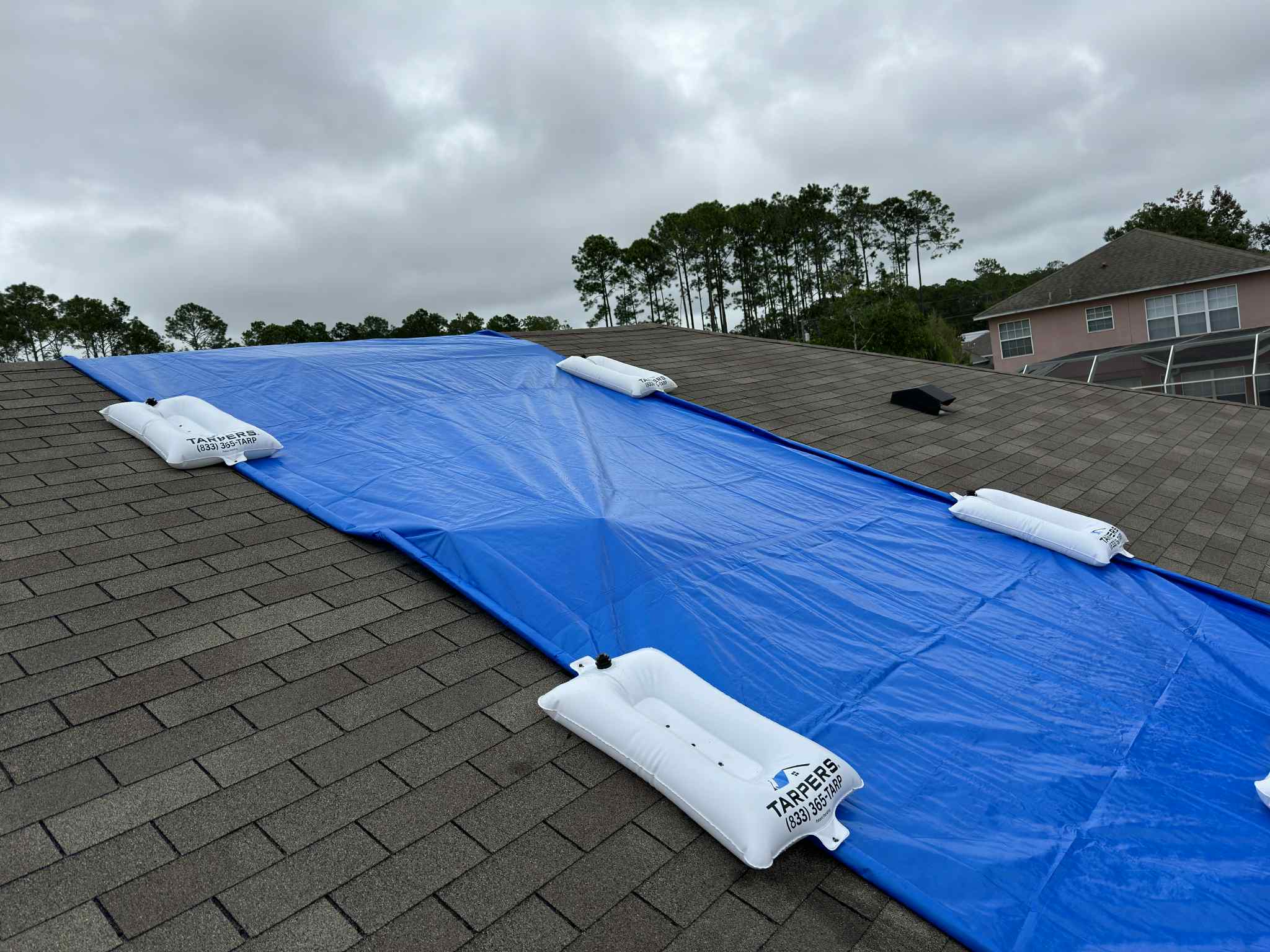
On May 1, 2026, Insurance Journal featured Tarpers and TarpBags® in a story about new property loss mitigation products in the Southeast. The article, titled “Florida Firms Introduce New Tarp and Flood-Protection Products,” recognized TarpBags® as a new approach to securing emergency roof tarps without nails or heavy sandbags.
For the insurance industry, the timing matters. With Atlantic hurricane season approaching and the Southeast continuing to absorb the highest concentration of catastrophe claims in the country, carriers and adjusters are looking for vendor partners that reduce claim severity and protect crews in the field. The Insurance Journal coverage validates what Tarpers has been building toward: a non-destructive tarping system that addresses two of the most persistent sources of secondary damage and field risk in emergency mitigation work.
The Two Problems TarpBags® Solves
The article identifies the two methods that have historically dominated emergency roof tarping and the costs each one creates.
Nail-down tarping introduces new leak points. When workers drive nails through a tarp and into shingles, the holes do not seal. Water finds them. Six to eighteen months later, those penetrations can produce slow leaks that drive supplemental claims, additional adjuster visits, and friction between the property owner and the carrier. The original storm damage gets compounded by a vendor decision made in the days right after the event.
Sandbag anchoring creates safety exposure. When workers haul heavy sandbags up ladders to secure tarp edges, the risk profile of the job changes. Falls and lifting injuries are real concerns for crews and real cost exposures for the vendors and carriers who back them. Falls from elevation remain among the leading causes of construction fatalities. Adding repetitive heavy lifting at height multiplies that risk.
TarpBags® was engineered to remove both failure points from the job.
How TarpBags® Works
TarpBags® are water-fillable anchoring bags engineered specifically for roof tarping. Crews carry the empty bags up the ladder (light, compact, no lifting hazard), position them along the furring strips that secure the tarp edges, and fill them with water from a standard garden hose right on the roof. The filled bags create distributed weight along the tarp perimeter without penetrating the roof surface and without requiring anyone to carry heavy material up a ladder.
The result is faster deployment, safer crews, and no new leak points introduced during the temporary protection phase of a claim.
Why This Matters for Carriers and Adjusters
For the carrier-side audience, the practical impact comes down to claim economics and vendor risk.
Reduced supplemental claims. Non-destructive tarping eliminates the nail-induced leak points that drive secondary loss filings months after the original storm. The same tarp protecting the same roof produces fewer downstream complications.
Cleaner claim documentation. A roof that has been protected without penetration looks materially different at the adjuster site visit. Repair scope can stay focused on the original storm damage rather than expanding to cover vendor-introduced issues.
Lower vendor risk profile. Carriers and TPAs that route work through vendors using safer field methods carry less indirect exposure to workers compensation events and the operational disruption that follows them.
Faster catastrophe response. During large loss events, the speed at which crews can deploy and secure properties directly affects claim severity across an entire book of business. Methods that remove the heaviest physical demands from field crews scale more cleanly during peak surge.
What Comes Next
Tarpers is actively deploying TarpBags® across its operating crews throughout Florida and rolling the system out to its catastrophe response operations in Texas, Louisiana, Mississippi, Alabama, Georgia, South Carolina, and North Carolina. The Insurance Journal feature is one part of a broader industry conversation about reducing claim severity through better field methods, and Tarpers will continue building the documentation, training, and operational infrastructure that lets carrier and TPA partners deploy the system with confidence.
Read the full Insurance Journal article.
To discuss vendor partnerships, carrier-direct programs, or TPA integration, contact the Tarpers insurance partnerships team or call (833) 365-TARP.
Partner With Tarpers
Whether you are an insurance carrier, a TPA, or an adjuster looking for reliable non-destructive tarping vendors, we are here to help. Get in touch with our team.