
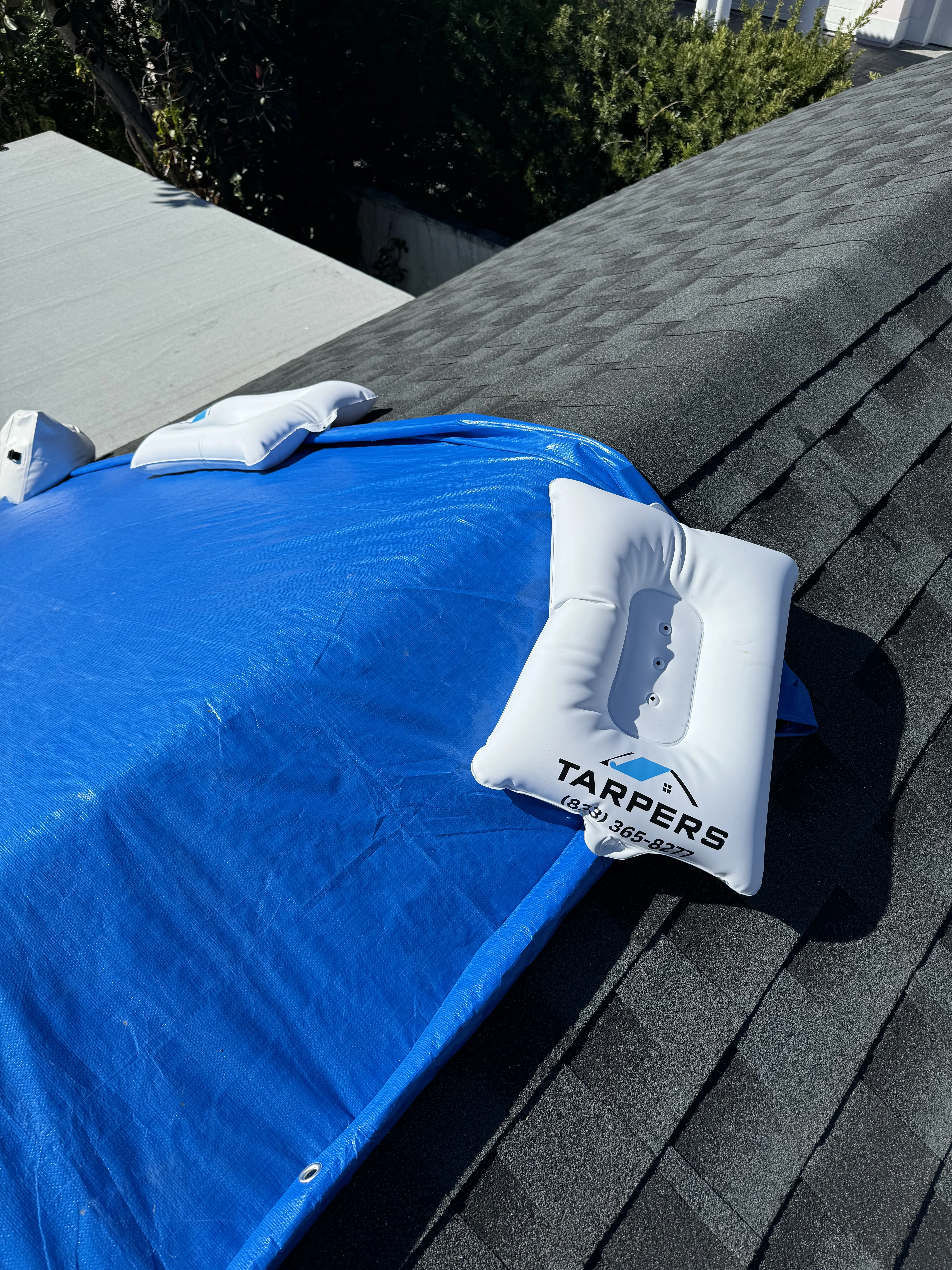
When a roof is breached during a storm, the clock starts immediately. Water doesn't wait for an adjuster to arrive, a contractor to be dispatched, or a coverage decision to be made. It moves through insulation, into wall cavities, across subfloor assemblies, and down into finished living spaces. The longer that process runs unchecked, the more the eventual claim cost grows.
That's the core economic argument for fast emergency mitigation. It's not about optics or customer service scores. It's about claim severity, and the data from carriers and TPAs consistently shows that response time in the first 48 hours is one of the strongest predictors of total loss cost.
Why Response Time Drives Claim Cost
The relationship between time and claim severity isn't linear. It's exponential in the early hours. A roof breach that gets tarped within four hours of a storm typically results in a contained, manageable claim. The same breach left open for 24 to 48 hours can trigger secondary damage categories that dwarf the original structural loss.
Secondary water damage is the most obvious example. Most carrier protocols recognize that interior deterioration can begin within 24 to 48 hours in humid climates like Florida and the Southeast. Once it is present, the claim shifts from a roofing and drywall repair to a full remediation event. That's a different cost tier entirely.
Beyond that, delayed tarping allows water to migrate into electrical systems, HVAC equipment, and structural framing. Each of those categories adds line items that weren't in the original estimate. Adjusters working in Xactware or Symbility know how quickly a scope can expand when secondary damage is documented. The mitigation response time is often the single variable that determines whether a claim stays in one scope or grows into three.
What "Fast" Actually Means in the Field
Speed in emergency mitigation isn't just about getting a truck on the road. It's about having the right materials staged, the right crew trained, and the right documentation workflow ready before the storm hits. Carriers and TPAs that work with pre-vetted mitigation vendors see faster dispatch times because the vendor relationship is already established. There's no credentialing delay, no insurance verification hold, no back-and-forth on scope authorization.
Tarpers operates with a catastrophe response model built around this reality. When a storm event is forecast, crews are pre-positioned. When dispatch comes in, the response is measured in hours, not days. That's not a marketing claim. It's an operational structure designed around the claim cycle time expectations that carriers and TPAs actually have.
The non-destructive tarping method Tarpers uses also matters here. TarpBags® weighted ballast systems don't require nail penetrations into the roof deck. That means installation is faster because there's no need to work around existing shingles or worry about creating additional damage during the mitigation itself. A crew can secure a large roof section in a fraction of the time it takes to nail down a traditional tarp, and the result is a watertight seal that holds through additional weather events.
How This Affects Claim Cycle Time
Claim cycle time is a metric that matters to carriers, TPAs, and reinsurers. Longer cycles mean more open reserves, more adjuster touchpoints, more policyholder friction, and higher administrative cost. Fast mitigation compresses the cycle at the front end by stopping damage progression early.
When a roof is properly tarped within the first few hours of a breach, the adjuster can scope a contained loss. There's no need to wait for drying reports, moisture assessments, or secondary damage documentation before closing the file. The claim moves from first notice of loss to settlement faster because the damage footprint didn't expand.
For carriers managing large CAT events, this multiplies across hundreds or thousands of claims simultaneously. A vendor network that consistently responds within four to six hours of dispatch can meaningfully reduce the aggregate severity of a storm event's book impact. That's the kind of operational leverage that shows up in loss ratios, not just individual claim files.
For more on how Tarpers structures its catastrophe response operations, see the catastrophe response services page. Insurance professionals can also reach the team directly through the insurance contact page.
Documentation That Supports the Claim File
Fast response only helps if it's documented in a way that supports the claim file. Adjusters need to know when the tarp was installed, what method was used, what area was covered, and whether the installation meets carrier standards. Tarpers provides timestamped photo documentation, GPS-tagged installation records, and written confirmation of the non-destructive method used.
That documentation integrates cleanly into Xactware and Symbility workflows. There's no ambiguity about what was done, when it was done, or whether the method is consistent with carrier guidelines. For adjusters managing high-volume CAT files, that clarity reduces the back-and-forth that slows cycle time.
External resources like the Insurance Information Institute document the relationship between mitigation timing and claim outcomes. The evidence base for fast response is well-established. The question for carriers and TPAs is whether their vendor network is actually structured to deliver it.
Building a Vendor Network That Performs Under Pressure
The time to evaluate a mitigation vendor is not during a CAT event. By then, the decisions that matter have already been made. Carriers and TPAs that build their vendor relationships before storm season have access to pre-positioned crews, established documentation workflows, and response time commitments that hold under pressure.
Tarpers is available for pre-event vendor credentialing conversations with carrier field ops, vendor managers, and TPA claims leadership. The team can be reached at (833) 365-TARP. For insurance professionals looking to understand how the non-destructive tarping method fits into existing carrier guidelines, the emergency tarping services page covers the technical details.
The math on mitigation response time is straightforward. Faster response means less secondary damage, smaller claim scope, shorter cycle time, and lower total cost. The operational question is whether your vendor network is built to deliver that speed when it matters most.
Partner With Tarpers
Whether you are an insurance carrier, a TPA, or an adjuster looking for reliable non-destructive tarping vendors, we are here to help. Get in touch with our team.