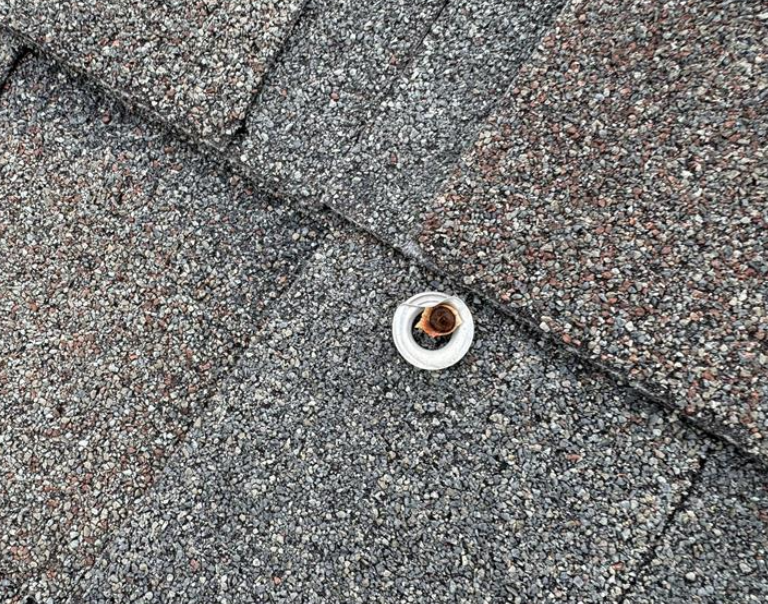
At first glance the image above might not look like a big problem. It is just a single fastener driven through a shingle. But this small detail tells a much bigger story about how emergency roof tarping is often done wrong and how that shortcut can turn into long term roof damage.
Many companies still rely on nails or screws to secure emergency tarps. Those fasteners pierce the roofing system and immediately compromise the waterproof barrier. Even worse most of these fasteners are not designed for long term exterior exposure. Over time they rust.
Rust is not just cosmetic. As metal corrodes it expands. That expansion breaks down the surrounding shingle material and widens the penetration point. Water begins to follow the fastener into the roof deck. What started as temporary protection becomes a permanent leak.
The image shows exactly that problem. A rusted fastener surrounded by deteriorating shingle material. This type of damage often goes unnoticed until stains appear on ceilings or rot is discovered in the decking. At that point the cost of repair is far greater than the original storm damage.
Another issue with nailed tarps is removal. When the tarp is finally taken off each nail hole must be repaired. In many cases dozens or even hundreds of penetrations are left behind. On certain roof types like metal tile or slate those penetrations should never exist at all.
At Tarpers we take a different approach. Our systems are designed to secure tarps without penetrating the roof surface using our non-destructive tarping method. No nails means no rust. No holes means no hidden leaks. The roof remains intact while still being protected from further water intrusion. Learn more about our emergency roof tarping services and how we protect your property.
Insurance carriers property managers and homeowners all benefit from non-destructive tarping. It reduces secondary damage eliminates future leak paths and prevents avoidable repair disputes.
Emergency protection should never create new problems. If a temporary solution leaves behind permanent damage it was never the right solution to begin with.
That small rusted fastener is a reminder that how a tarp is installed matters just as much as having one installed at all.