When a roof is damaged by a storm, the tarp becomes the first line of defense against additional loss. In insurance related roof damage, temporary protection is not cosmetic. It is a critical loss mitigation measure designed to prevent water intrusion, interior damage, and claim escalation.
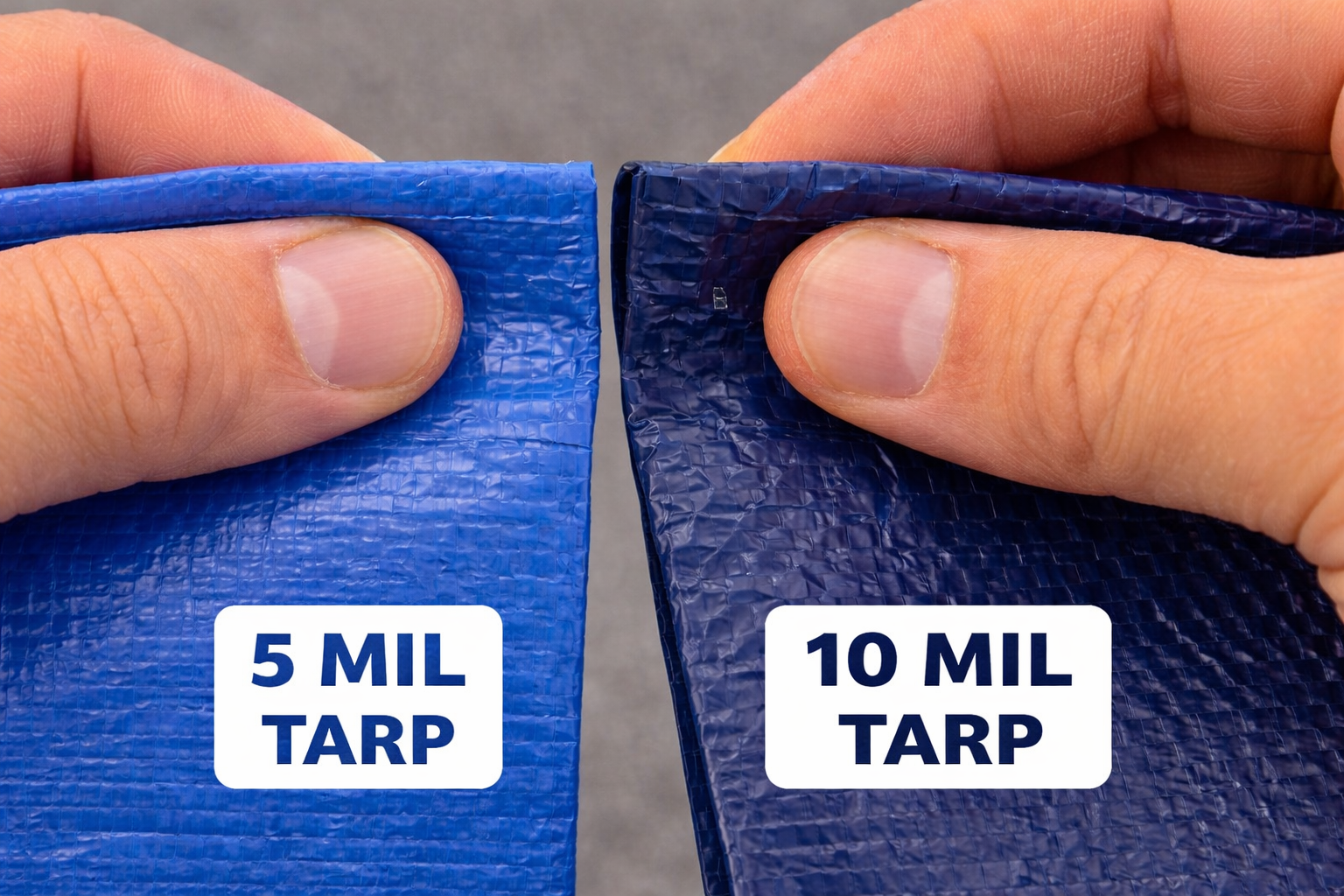
That is why Tarpers uses 10+ mil heavy-duty tarps for emergency roof tarping services instead of the common 5 mil tarps typically sold at big box retail stores.
Understanding Tarp Thickness and Why It Matters
Tarp thickness is measured in mils. One mil equals one thousandth of an inch. While the difference between 5 mil and 10 mil may appear small on paper, in real world roof tarping conditions the performance difference is significant.
A 10 mil tarp is approximately twice as thick as a 5 mil tarp. That added thickness directly affects tear resistance, puncture resistance, and the ability to withstand wind uplift and prolonged exposure to weather.
In emergency roof tarping, these factors determine whether temporary protection holds or fails.
The Limitations of 5 Mil Tarps in Storm Response
Many general purpose tarps sold in retail stores are approximately 5 mil thick. These tarps are commonly marketed as heavy duty, but they are typically designed for short term ground coverage, debris protection, or light outdoor use.
On a damaged roof, tarps are exposed to sustained wind pressure, sharp roof edges, fasteners, foot traffic, and continuous sun exposure. Thin tarps are more likely to tear or pull loose under these conditions.
When a tarp fails, water intrusion can occur immediately, leading to interior damage, moisture risk, and secondary losses that increase insurance claim severity.
Why 10+ Mil Tarps Are Standard at Tarpers
Tarpers uses 10+ mil heavy-duty tarps because they provide a higher level of reliability during emergency roof protection.
Thicker material offers greater resistance to tearing when tensioned across damaged roof sections. It performs better against abrasion from shingles, metal panels, tile edges, and debris. Heavier tarps also maintain integrity longer during extended temporary protection periods, which are common when permanent repairs are delayed by permitting, material availability, or claim processing.
For insurance carriers, this reduces the likelihood of secondary damage and helps control loss exposure.
Tarping Is Mitigation, Not Just Coverage
Emergency roof tarping is a mitigation service, not a temporary convenience. The purpose is to stabilize the structure and protect the interior until permanent repairs can be completed.
Using inadequate materials undermines this goal.
By standardizing on 10+ mil tarps, Tarpers provides temporary roof protection that aligns with the intent of insurance loss mitigation and post storm damage protection.
Built for Insurance and Commercial Standards
Tarpers performs roof tarping services with insurance requirements in mind. Material selection, installation methods, and durability all matter when temporary protection is expected to perform under real storm conditions.
Heavier tarps are one component of a professional emergency response approach that prioritizes safety, durability, and claim protection.
The Bottom Line for Insurance Professionals
When evaluating emergency roof tarping services, tarp thickness matters. Thicker tarps provide better protection, last longer, and reduce the risk of secondary damage.
Tarpers uses 10+ mil heavy-duty tarps because emergency roof tarping is not a place to cut corners. It is a critical step in protecting the property, the insured, and the insurance claim.